

Search Results
Showing 91 - 100 of 466 results
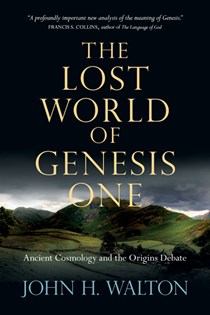 Paperback
The Lost World of Genesis One
Ancient Cosmology and the Origins Debate
The Lost World Series
by John H. Walton
John H. Walton on the Ancient Context and Modern Significance of Genesis One
In The Lost World of Genesis One, John H. Walton proposes a fresh reading of Genesis that remains faithful to the original context and that preserves and enhances the theological vitality of the text. Walton addresses key areas of controversy among Christians, including the relationship ...
 Paperback
Christian Leadership
LifeGuide Bible Studies
by John Stott
With Carolyn NystromThe most influential leader in the early church was undoubtedly the apostle Paul. He never lost the vision of God's single new humanity—Jews and Gentiles together. And in his letters we watch him exercising his leadership skills among the early Christians..
This nine-session LifeGuide® Bible Study by John Stott is based on his book Basic Christian Leadership and covers the first four ...
Number of Studies: 9
 Hardback
Joshua, Judges, Ruth, 1-2 Samuel
Volume 4
Ancient Christian Commentary on Scripture
Edited by John R Franke
General Editor Thomas C. OdenThe history of the entry into the Promised Land followed by the period of the Judges and early monarchy may not appear to readers today as a source for expounding the Christian faith. But the church fathers readily found parallels, or types, in the narrative that illumined the New Testament. An obvious link was the similarity in name between Joshua, Moses' successor, and Jesus—indeed, ...
 Hardback
Acts
Volume 5
Ancient Christian Commentary on Scripture
Edited by Francis Martin
General Editor Thomas C. OdenThe Acts of the Apostles—or more in keeping with the author's intent, the Acts of the Ascended Lord—is part two of Luke's story of "all that Jesus began to do and teach." In it he recounts the expansion of the church as its witness spread from Jerusalem to all of Judea and Samaria and to the ends of the earth.
While at least forty early church authors commented on Acts, the ...
 Paperback
The Message of Chronicles
The Bible Speaks Today Series
by Michael Wilcock
Michael Wilcock sees Chronicles first and foremost as a sermon. Its object: to foster a right relationship between God and his people. The Chronicler finds in the records of Israel the great overall pattern of God's hand in history. The Lord's constant mercy, love, and faithfulness shine through. With great perception, the Chronicler first selects and then proclaims this vibrant ...
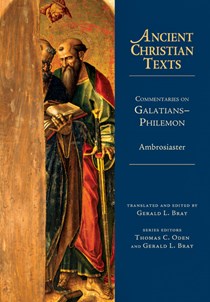 Hardback
Commentaries on Galatians--Philemon
Ancient Christian Texts
by Ambrosiaster
Edited and Translated by Gerald BrayAmbrosiaster ("Star of Ambrose") is the name given to the anonymous author of the earliest complete Latin commentary on the thirteen epistles of Paul. The commentaries were thought to have been written by Ambrose throughout the Middle Ages, but their authorship was challenged by Erasmus, whose arguments have proved decisive.
The commentaries, which serve as important witnesses to pre-Vulgate ...
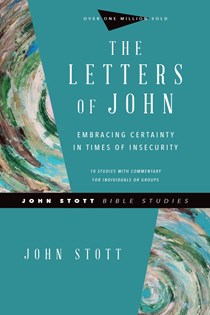 Paperback
Letters of John
Embracing Certainty in Times of Insecurity
John Stott Bible Studies
by John Stott
With Dale Larsen and Sandy LarsenWe live in times of insecurity.
New nations are coming to birth. Social and political patterns are evolving. Violence, terrorism, and war threaten the very foundations of civilization. These external insecurities are reflected in the internal world of the mind and of the spirit. There is widespread distrust of Christian faith and a preference for agnosticism or free thought. ...
Number of Studies: 10
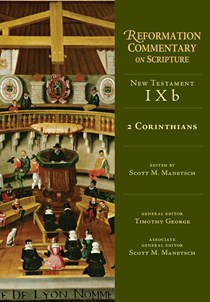 Hardback
2 Corinthians
New Testament Volume 9B
Reformation Commentary on Scripture
Edited by Scott M. Manetsch
"Therefore, if anyone is in Christ, he is a new creation. The old has passed away; behold, the new has come."
When the Reformers of the sixteenth century turned to this biblical text, originally written by Paul to the first-century church in Corinth, they found truths that apply to Christians regardless of their historical context. For example, Reformed theologian Wolfgang ...
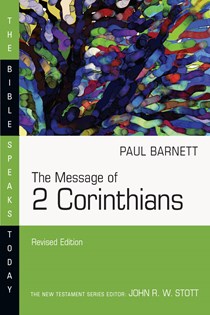 Paperback
The Message of 2 Corinthians
The Bible Speaks Today Series
by Paul W. Barnett
The letter of 2 Corinthians reveals a powerful debate between the apostle Paul and a shadowy group of opponents, along with the local church members who supported them. Paul records a range of emotional extremes as he defends hisdoctrine, ministry, and character to this beloved yet troublesome congregation. In his response to the conflict, Paul develops a momentous theological message: ...
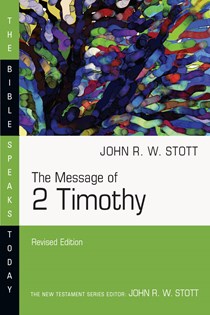 Paperback
The Message of 2 Timothy
The Bible Speaks Today Series
by John Stott
After teaching many times from the book of 2 Timothy, John Stott writes, "I have been impressed afresh by the timeliness for today of what the apostle writes, especially for young Christian leaders. For our era too is one of theological and moral confusion, even of apostasy. And the apostle summons us, as he summoned Timothy, to be strong, brave and steadfast."
In this revised ...


