

Search Results
Showing 91 - 100 of 460 results
-
 paperback
Christian Leadership
LifeGuide Bible Studies
by John Stott
With Carolyn NystromThe most influential leader in the early church was undoubtedly the apostle Paul. He never lost the vision of God's single new humanity—Jews and Gentiles together. And in his letters we watch him exercising his leadership skills among the early Christians..
This nine-session LifeGuide® Bible Study by John Stott is based on his book Basic Christian Leadership and covers the first four ...
Number of Studies: 9
-
 paperback
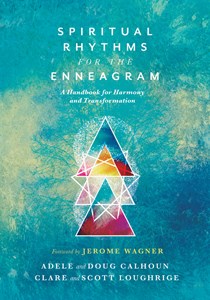
Spiritual Rhythms for the Enneagram
A Handbook for Harmony and Transformation
by Adele Ahlberg Calhoun, Doug Calhoun, Clare Loughrige, and Scott Loughrige
Foreword by Jerome WagnerThe Enneagram opens a remarkable window into the truth about us, enabling us to see how image, wounds, lies, triggers, and default responses shape us every bit as much as our faith. But simply diagnosing our number doesn't do justice to who we are. Nor does it necessarily change us or our relationships. Transformation happens as we grow in awareness and learn how to engage and reflect God's image. ...
-
 paperback
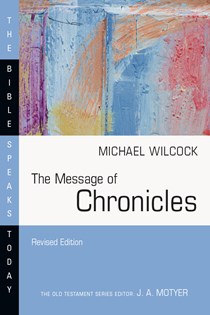
The Message of Chronicles
The Bible Speaks Today Series
by Michael Wilcock
Michael Wilcock sees Chronicles first and foremost as a sermon. Its object: to foster a right relationship between God and his people. The Chronicler finds in the records of Israel the great overall pattern of God's hand in history. The Lord's constant mercy, love, and faithfulness shine through. With great perception, the Chronicler first selects and then proclaims this vibrant ...
-
 hardcover
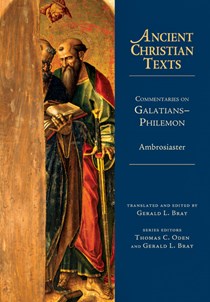
Commentaries on Galatians--Philemon
Ancient Christian Texts
by Ambrosiaster
Edited and Translated by Gerald BrayAmbrosiaster ("Star of Ambrose") is the name given to the anonymous author of the earliest complete Latin commentary on the thirteen epistles of Paul. The commentaries were thought to have been written by Ambrose throughout the Middle Ages, but their authorship was challenged by Erasmus, whose arguments have proved decisive.
The commentaries, which serve as important witnesses to pre-Vulgate ...
-
 paperback
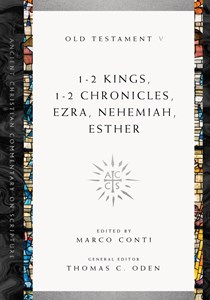
1-2 Kings, 1-2 Chronicles, Ezra, Nehemiah, Esther
Volume 5
Ancient Christian Commentary on Scripture
Edited by Marco Conti
General Editor Thomas C. OdenThe church fathers, as they did in earlier books dealing with Israel's history from the time of Joshua to the united monarchy, found ample material for typological and moral interpretation in 1-2 Kings, 1-2 Chronicles, Ezra, Nehemiah and Esther. It will be immediately clear to readers of this volume that they gave much more attention to 1-2 Kings than to others; whether this was ...
-
 paperback
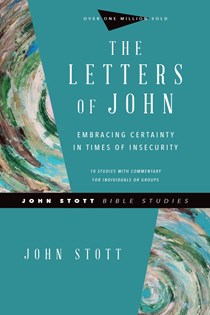
Letters of John
Embracing Certainty in Times of Insecurity
John Stott Bible Studies
by John Stott
With Dale Larsen and Sandy LarsenWe live in times of insecurity.
New nations are coming to birth. Social and political patterns are evolving. Violence, terrorism, and war threaten the very foundations of civilization. These external insecurities are reflected in the internal world of the mind and of the spirit. There is widespread distrust of Christian faith and a preference for agnosticism or free thought. ...
Number of Studies: 10
-
 hardcover
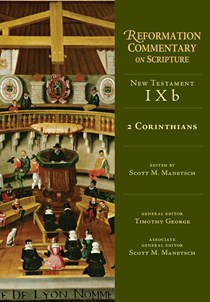
2 Corinthians
New Testament Volume 9B
Reformation Commentary on Scripture
Edited by Scott M. Manetsch
"Therefore, if anyone is in Christ, he is a new creation. The old has passed away; behold, the new has come."
When the Reformers of the sixteenth century turned to this biblical text, originally written by Paul to the first-century church in Corinth, they found truths that apply to Christians regardless of their historical context. For example, Reformed theologian Wolfgang ...
-
 paperback
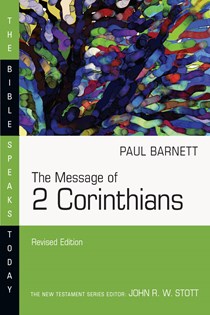
The Message of 2 Corinthians
The Bible Speaks Today Series
by Paul W. Barnett
The letter of 2 Corinthians reveals a powerful debate between the apostle Paul and a shadowy group of opponents, along with the local church members who supported them. Paul records a range of emotional extremes as he defends hisdoctrine, ministry, and character to this beloved yet troublesome congregation. In his response to the conflict, Paul develops a momentous theological message: ...
-
 paperback
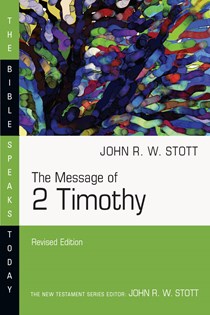
The Message of 2 Timothy
The Bible Speaks Today Series
by John Stott
After teaching many times from the book of 2 Timothy, John Stott writes, "I have been impressed afresh by the timeliness for today of what the apostle writes, especially for young Christian leaders. For our era too is one of theological and moral confusion, even of apostasy. And the apostle summons us, as he summoned Timothy, to be strong, brave and steadfast."
In this revised ...
-
 paperback
The Message of 2 Peter & Jude
The Bible Speaks Today Series
by R. C. Lucas and Chris EW Green
The letters of 2 Peter and Jude are sometimes overlooked, yet their message for the church is timely and compelling. Today, as in the first century, Christians must guard against false guides who can lead believers astray and cause divisions within the community of faith. Responding to this ever-present danger, 2 Peter and Jude equip readers to discern truth from illusion and exhort ...


