

Search Results
Showing 91 - 100 of 637 results
 Paperback
The Message of 1 Corinthians
The Bible Speaks Today Series
by David Prior
The ancient city of Corinth was well-known for its prosperity, diversity—and debauchery. Any church planted there was bound to have problems. Indeed, snobbishness, divisiveness, insensitivity, doctrinal looseness, and overexuberance were all too common in the Corinthian church. When the apostle Paul heard about these difficulties, he was grieved because he had founded the church ...
 Paperback
The Message of 1 Timothy & Titus
The Bible Speaks Today Series
by John Stott
In the letters to Timothy and Titus, as he nears the end of his life, Paul focuses on the idea of inheritance. The faithful, he writes, must guard and pass on the heritage of gospel truth for the next generation. Paul's clear commitment to the church as "the pillar and foundation of the truth" continues to challenge Christians in every era.
In this revised Bible Speaks Today ...
 Paperback
The Message of 1 Peter
The Bible Speaks Today Series
by Edmund P. Clowney
The letter of 1 Peter is a traveler's guide for Christian pilgrims. To believers scattered throughout Asia Minor, Peter wrote with a reminder that they were temporary residents, strangers looking toward their true homeland. As stormy persecutions were beginning in the region, Peter brought a message of hope, encouraging readers to see their lives in the context of God's great work ...
 Paperback
1 Peter
An Introduction and Commentary
Tyndale New Testament Commentaries
by Wayne A. Grudem
Series edited by Eckhard J. Schnabel
Consulting Editor Nicholas PerrinPeter's short letter to the "exiles of the dispersion" addresses many topics: holiness, the sufferings of Christ, God's sovereignty in salvation and life, the grace of God, the work of the Holy Spirit, the church as the new peopleof God, the reality of the unseen spiritual world, and trusting in God in the midst of daily circumstances. What ties all these concepts together, Wayne ...
 Ebook
EbookCat & Dog Prayer
Rethinking Our Conversations with Our Master
by Bob Sjogren and Gerald Robison
Cats and dogs respond differently to their masters's care. While the dog thinks "You must be God!" the cat thinks "I must be God!":
When we first become believers, we still have a natural tendency to be self-centered, especially in how we pray. As a result, many Christians prayers that are more of a laundry list of "all about me" requests. Because God doesn't answer these kinds of prayer, ...
 Ebook
EbookCat & Dog Theology
Rethinking Our Relationship with Our Master
by Bob Sjogren and Gerald Robison
The God-given traits of cats ("you exist to serve me") and dogs ("I exist to serve you") are often similar to certain theological attitudes held by many Christians in their view of God and their relationship to him. Using the differences between cats and dogs in a light-hearted manner, the authors challenge this thinking in deep and profound ways..
This life-changing book will provide a new ...
 Paperback
The Pastoral Epistles
An Introduction and Commentary
Tyndale New Testament Commentaries
by Osvaldo Padilla
Series edited by Eckhard J. Schnabel
Consulting Editor Nicholas PerrinIn his New Testament letters to Timothy and Titus, the apostle Paul is concerned with church order, defending correct doctrine, and passing on the faith.
In this introduction and commentary to both letters, Osvaldo Padilla sets them in their distinct context of Paul's later ministry and draws out their pastoral wisdom. With thoughtful exposition he shows how the lessons Paul ...
 Hardback
Dictionary of the Old Testament: Historical Books
The IVP Bible Dictionary Series
Edited by Bill T. Arnold and H. G. M. Williamson
Edited by Bill T. Arnold and Hugh G. M. Williamson, the Dictionary of the Old Testament: Historical Books picks up where the Dictionary of the Old Testament: Pentateuch left off—with Joshua and Israel poised to enter the land—andcarries us through the postexilic period. Following in the tradition of the award-winning IVP dictionaries focused on the New Testament, this encyclopedic ...
 Ebook
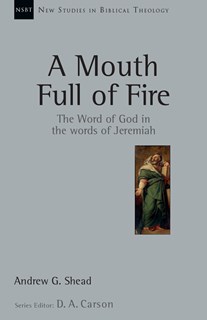
EbookA Mouth Full of Fire
The Word of God in the Words of Jeremiah
New Studies in Biblical Theology
by Andrew G Shead
Series edited by D. A. Carson"I am putting my words as a fire in your mouth; these people are tinder and it will consume them." (Jeremiah 5:14)
In the book of Jeremiah, not only is the vocabulary of "word" and "words" uniquely prevalent, but formulae marking divine speech also play an unprecedented role in giving the book's final form its narrative and theological shape. Indeed, "the word of the Lord" is arguably the ...
 Ebook
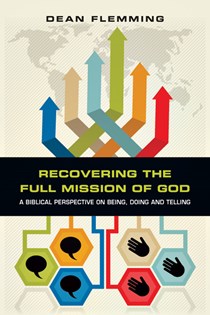
EbookRecovering the Full Mission of God
A Biblical Perspective on Being, Doing and Telling
by Dean Flemming
Is our gospel witness too small? Should the gospel be proclaimed in words only? Or should we preach the gospel in deeds—and when necessary use words? Or are we missing something in playing the witness of words against deeds? If you are concerned about evangelizing the post-Christian West or the world beyond, you have probably debated this issue. And evangelical instincts drive us to Scripture. In ...


