

Search Results
Showing 111 - 120 of 718 results
 Ebook
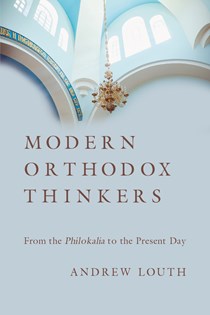
EbookModern Orthodox Thinkers
From the Philokalia to the Present
by Andrew Louth
Andrew Louth, one of the most respected authorities on Orthodoxy, introduces us to twenty key thinkers from the last two centuries. He begins with the Philokalia, the influential Orthodox collection published in 1782 which marked so manysubsequent writers. The colorful characters, poets and thinkers who populate this book range from Romania, Serbia, Greece, England, France and also include ...
 Ebook
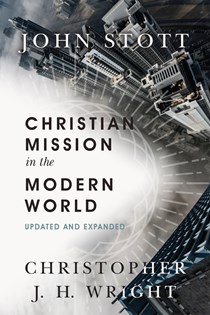
EbookChristian Mission in the Modern World
by John Stott
Revised by Christopher J. H. WrightSome emphasize Christian mission as verbal proclamation and "saving souls." Others focus on global justice issues or relief and development work. Can we do both?In this classic book, John Stott shows that Christian mission must encompass both evangelism and social action. He offers careful definitions of five key terms--mission, evangelism, dialogue, salvation and conversion. ...
-
Mark Charles

Mark Charles, a man of Navajo and Dutch American descent, is a speaker, writer, and consultant on the complexities of American history, race, culture, and faith. He is the author of the blog Reflections from the Hogan and was the Washington, DC, correspondent and columnist for Native News Online. He has served on the boards of the Christian Community Development Association and the Christian Reformed Church of North America. He and his family live in Washington, DC.
 Paperback
Intercultural Theology, Volume Three
A Theology of Interreligious Relations
Missiological Engagements
by Henning Wrogemann
Ten Outstanding Books in Mission Studies, World Christianity and Intercultural Theology for 2019 — International Bulletin of Mission Research (IBMR)
Christianity is not only a global but also an intercultural phenomenon.
In this third volume of his three-volume Intercultural Theology, Henning Wrogemann proposes that we need to go beyond ...
 Paperback
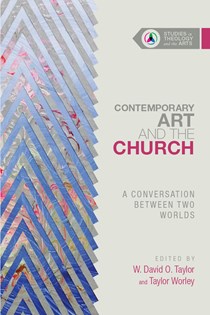
Contemporary Art and the Church
A Conversation Between Two Worlds
Studies in Theology and the Arts Series
Edited by W. David O. Taylor and Taylor Worley
The church and the contemporary art world often find themselves in an uneasy relationship in which misunderstanding and mistrust abound.
On one hand, the leaders of local congregations, seminaries, and other Christian ministries often don't know what to make of works by contemporary artists. Not only are these artists mostly unknown to church leaders, they and their work ...
 Paperback
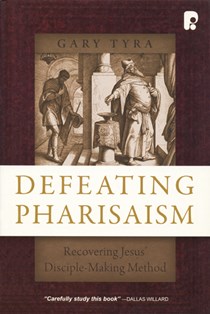
Defeating Pharisaism
Recovering Jesus' Disciple-Making Method
by Gary Tyra
Pharisaism (legalism, dogmatism, separatism, judgmentalism, etc.) is alive and well and a destructive force in too many evangelical churches. This plague hinders effective outreach, burns out professional and lay leaders and has contributed to themass alienation of tens of thousands of young people from evangelical churches to the point where they have no church affiliation at all or they associate ...
 Paperback
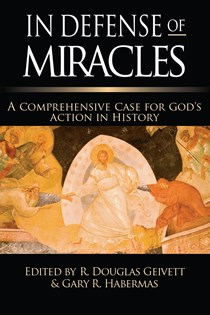
In Defense of Miracles
A Comprehensive Case for God's Action in History
Edited by R. Douglas Geivett and Gary R. Habermas
Rumors of deception have surrounded claims of Jesus' resurrection ever since the soldiers appointed to guard his tomb made their report to the Jewish authorities. But no one has led the philosophic charge against miracles quite as influentially as David Hume with his 1748 essay "Of Miracles." Refined, revised, restated, his arguments still affect philosophic discussions of miracles today.
During ...
-
-
-


