

Search Results
Showing 131 - 140 of 220 results
-
Daniel A. Westberg
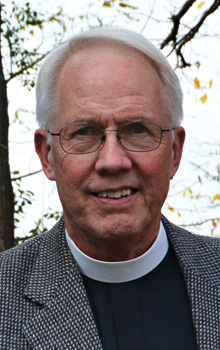
Daniel A. Westberg (1949-2017) was professor of ethics and moral theology at Nashotah House Theological Seminary. His books include Right Practical Reason: Action, Aristotle and Prudence in Aquinas.
-
James Choung

James Choung is vice president of strategy and innovation for InterVarsity Christian Fellowship/USA. He has been in campus ministry for over twenty years and previously served as InterVarsity's national director of evangelism. He is also the author of Real Life and coauthor of Longing for Revival.
-
Janis Bragan Balda
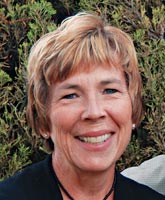
Janis Bragan Balda is a professor of management at Fuller Seminary and UCLA Extension. She established the Peter F. Drucker Society of the Caribbean at SGU and is a principal at the Max De Pree Center for Leadership.
-
Leroy Barber

Leroy Barber has dedicated more than twenty-five years to eradicating poverty, confronting homelessness, restoring local neighborhoods, healing racism and living what Dr. King called "the beloved community." He is the author of New Neighbor and Everyday Missions, and the coauthor of Red, Brown, Yellow, Black and White with Velma Maia Thomas. He was also a contributing author to Tending to Eden by Scott Sabin and the groundbreaking book UnChristianby David Kinnaman and Gabe Lyons. The co-founder and director of the Voices Project and college pastor at Kilns College, Barber starts projects that shape society. In 1989, burdened by the plight of Philadelphia's homeless, he and his wife Donna founded Restoration Ministries to serve homeless families and children living on the streets, and in 1994 he became the director of internship programs at Cornerstone Christian Academy. He was licensed and ordained at Mt Zion Baptist Church where he served as youth director with Donna, and also served as associate minister of evangelism. In 1997, he joined FCS Urban Ministries, working with Atlanta Youth Project to serve as the founding executive director of Atlanta Youth Academies, a private elementary school providing quality Christian education for low-income families in the inner city. He also helped found DOOR Atlanta, Community Life Church, South Atlanta Marketplace and Community Grounds Coffee shop in Atlanta, as well as Green My Hoodand the Voices Project. He is on the boards of The Simple Way, Missio Alliance, The Evangelical Environmental Network (EEN) and the Christian Community Development Association (CCDA). Barber and his wife Donna have been married thirty years and together they have five children.
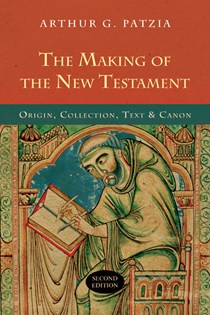 Paperback
The Making of the New Testament
Origin, Collection, Text & Canon
by Arthur G. Patzia
The story of the making of the New Testament is one in which scrolls bumped across cobbled Roman roads and pitched through rolling Mediterranean seas, finally finding their destinations in stuffy, dimly lit Christian house churches in Corinth or Colossae. There they were read aloud and reread, handled and copied, forwarded and collected, studied and treasured. And eventually they were brought together ...
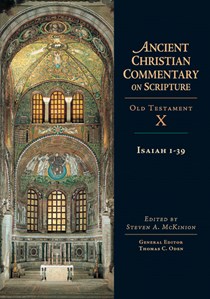 Hardback
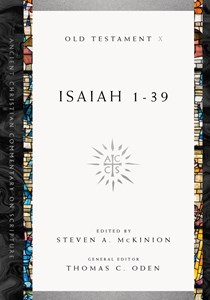
Isaiah 1-39
Volume 10
Ancient Christian Commentary on Scripture
Edited by Steven A. McKinion
General Editor Thomas C. OdenFor to us a child is born,
to us a son is given;
and the government will be upon his shoulder
and his name shall be called
"Wonderful Counselor, Mighty God,
Everlasting Father, Prince of Peace."For the early church fathers the prophecy of Isaiah was not a compendium of Jewish history or theology but an announcement of the coming Messiah fulfilled in the life and ministry ...
 Paperback
Isaiah 1-39
Volume 10
Ancient Christian Commentary on Scripture
Edited by Steven A. McKinion
General Editor Thomas C. OdenFor to us a child is born,
to us a son is given;
and the government will be upon his shoulder
and his name shall be called
"Wonderful Counselor, Mighty God,
Everlasting Father, Prince of Peace."For the early church fathers the prophecy of Isaiah was not a compendium of Jewish history or theology but an announcement of the coming Messiah fulfilled in the life and ministry ...
 Hardback
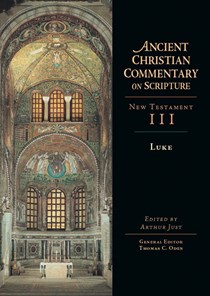
Luke
Volume 3
Ancient Christian Commentary on Scripture
Edited by Arthur Just
General Editor Thomas C. OdenFor the church fathers the Gospels did not serve as resources for individual analysis and academic study. They were read and heard and interpreted within the worshiping community. They served as sources for pastoral counsel and admonition for those who were committed to the Way. Although Matthew and John were generally the preferred Gospels, Luke, because of his particular interests and unique contributions, ...
 Paperback
Biblical Theology
Retrospect Prospect
Wheaton Theology Conference Series
Edited by Scott Hafemann
Ever since Brevard Childs's 1970 declaration of the crisis in biblical theology, the discipline has faced rumors of its imminent demise. But the patient refuses to die. The doctors continue to argue over how to proceed with treatment and even overwhether treatment is worth pursuing, but the patient hangs on.The turn of the millennium appears to be a good time for a fresh assessment of the discipline, ...
 Paperback
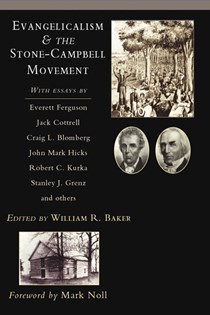
Evangelicalism & the Stone-Campbell Movement
Foreword by Mark A. Noll
Edited by William R. BakerThe Stone-Campbell Movement, also known as the Restoration Movement, arose on the frontiers of early nineteenth-century America. Like-minded Methodists, Baptists and Presbyterians abandoned denominational labels in order to be "Christians only." They called followers to join in Christian unity and restore the ideals of the New Testament church, holding authoritative no book but the Bible and believing ...


