

Search Results
Showing 181 - 190 of 718 results
 Ebook
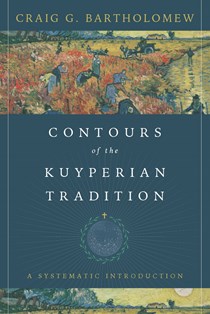
EbookContours of the Kuyperian Tradition
A Systematic Introduction
by Craig G. Bartholomew
Abraham Kuyper was, by any standard, one of the most extraordinary figures in modern Christian history. He was a Dutch Reformed minister, a gifted theologian, a prolific journalist, the leader of a political party, the cofounder of the Free University of Amsterdam (where he was professor of theology), a member of the Dutch Parliament, and eventually prime minister of the Netherlands.
Kuyper's ...
 Ebook
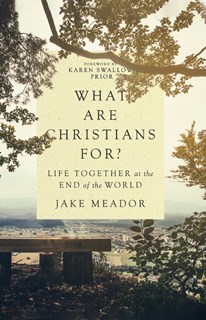
EbookWhat Are Christians For?
Life Together at the End of the World
by Jake Meador
Foreword by Karen Swallow PriorWhat does a Christian political witness look like in our day?
Politics ought to be defined by fidelity to the common good of all the members of society. But our modern Western politics are defined by a determination to bendthe natural world and human life to its own political and economic ends. This wholesale rejection of the natural order is behind the dominant revolutions ...
 Ebook
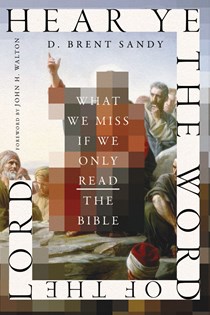
EbookHear Ye the Word of the Lord
What We Miss If We Only Read the Bible
by Brent Sandy
Foreword by John H. WaltonECPA Top Shelf Book Cover Award
Long before the words of the Bible were written, God's communication through the spoken word rang out loud and clear. Jesus in particular commissioned representatives to speak on his behalf even during the time of his earthly ministry. And yet today we are a reading culture. It is easy for modern Christians to take ...
 Ebook
EbookLight Unapproachable
Divine Incomprehensibility and the Task of Theology
by Ronni Dean Kurtz
How can finite creatures know an infinite God? How does limited knowledge impact what we can say of God?
Retrieving and constructing important insight from Scripture and key patristic, medieval, early modern, and modern theologians, Ronni Kurtz presents a rich analysis of the doctrine of divine incomprehensibility. Our theological language, says Kurtz, cannot capture the full ...
 Paperback
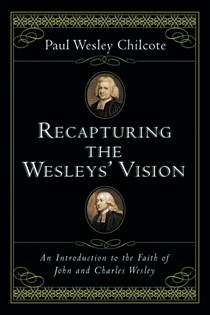
Recapturing the Wesleys' Vision
An Introduction to the Faith of John and Charles Wesley
by Paul Wesley Chilcote
Scholar and teacher Paul Wesley Chilcote provides a full and clear introduction to the dynamic faith of John and Charles Wesley. The vital theology of John is skillfully gleaned from his voluminous writings. The corresponding faith of Charles is culled from his enduring hymns. For students and general readers this book illuminates the vital balance the Wesleys found in Christian teaching that overcomes ...
 Paperback
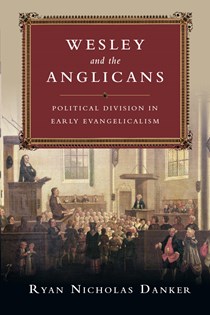
Wesley and the Anglicans
Political Division in Early Evangelicalism
by Ryan Nicholas Danker
Why did the Wesleyan Methodists and the Anglican evangelicals divide during the middle of the eighteenth century? Many would argue that the division between them was based narrowly on theological matters, especially predestination and perfection.Ryan Danker suggests, however, that politics was a major factor throughout, driving the Wesleyan Methodists and Anglican evangelicals apart. Methodism was ...
 Paperback
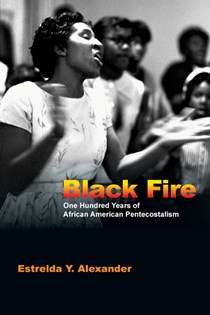
Black Fire
by Estrelda Y. Alexander
Estrelda Alexander was raised in an urban, black, working-class, oneness Pentecostal congregation in the 1950s and 1960s, but she knew little of her heritage and thought that all Christians worshiped and believed as she did. Much later she discovered that many Christians not only knew little of her heritage but considered it strange. Even today, most North Americans remain ignorant of black Pentecostalism.Black ...
 Ebook
EbookProverbs, Ecclesiastes, Song of Songs
Reformation Commentary on Scripture
Edited by David C. Fink
"For everything there is a season, and a time for every matter under heaven:
a time to be born, and a time to die..."
When the reformers of the sixteenth century turned to this well-known text from the Book of Ecclesiastes, they did not find a reason to despair, but rather confirmation of their hope and faith in God. For example, Martin Luther pointed ...
 Ebook
EbookGod Has Chosen
The Doctrine of Election Through Christian History
by Mark R. Lindsay
"He chose us in Christ before the foundation of the world . . ."
Among the traditional tenets of the Christian faith is the belief that God chooses or elects people for salvation. For some Christians, such an affirmation is an indication of God's sovereign and perfect will. For others, such a notion is troubling for it seems to downplay the significance of human agency and ...
 Ebook
EbookRewiring Your Preaching
How the Brain Processes Sermons
by Richard H. Cox
Foreword by Daniel G BlazerWhat preachers preach is not necessarily what hearers hear. Have you ever wondered why some hearers are affected by a sermon but not others? The issue may not necessarily be the content or delivery of the message. It may be how your hearers' brains process what you say. Modern neuroscience illuminates how our brains understand and hear sermons. Verbal stimuli can be accepted or rejected depending ...


