

Search Results
Showing 11 - 20 of 403 results
-
 hardcover
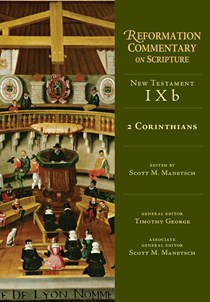
2 Corinthians
New Testament Volume 9B
Reformation Commentary on Scripture
Edited by Scott M. Manetsch
"Therefore, if anyone is in Christ, he is a new creation. The old has passed away; behold, the new has come."
When the Reformers of the sixteenth century turned to this biblical text, originally written by Paul to the first-century church in Corinth, they found truths that apply to Christians regardless of their historical context. For example, Reformed theologian Wolfgang ...
-
 paperback
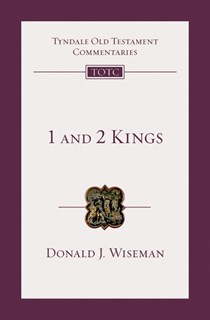
1 and 2 Kings
An Introduction and Commentary
Tyndale Old Testament Commentaries
by Donald J. Wiseman
The book of Kings is a unique source for understanding the history of Israel from the last days of the united kingdom under David to the eventual fall of the kingdoms of Israel and Judah. Presenting Israel's national history from a divine viewpoint, these narratives measure the kings of Israel and Judah not by the mark they leave on secular history, but by their "doing what is right in the Lord's ...
-
 paperback
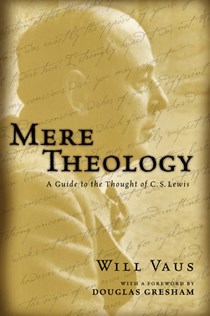
Mere Theology
A Guide to the Thought of C. S. Lewis
by Will Vaus
Foreword by Douglas GreshamWhat did C. S. Lewis believe about God, Jesus Christ, the Holy Spirit, heaven, hell, creation, the Fall, the forgiveness of sins, marriage and divorce, war and peace, the church and sacraments, masculinity and femininity?Lewis was not a professional theologian, but anyone who has read his writings--whether fiction or nonfiction, essays or correspondence--knows that profoundly Christian convictions ...
-
 paperback
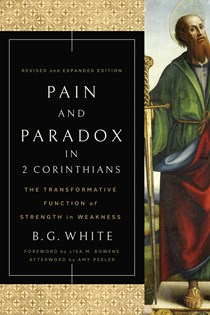
Pain and Paradox in 2 Corinthians
The Transformative Function of Strength in Weakness
by Benjamin Grant White
Afterword by Amy Peeler
Foreword by Lisa M. BowensPaul's Theology of How Christ Transforms Weakness Into Resurrection Power
What is God doing in our weaknesses? The world may say "nothing," but the apostle Paul says "everything."
The theological wellspring in 2 Corinthians is often overlooked, yet this letter may be one of the apostle's richest and most pastorally attuned writings. At the heart of 2 Corinthians lies ...
-
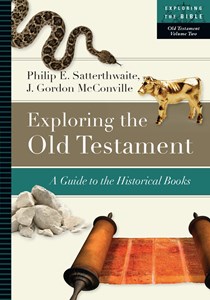 paperback
Exploring the Old Testament
A Guide to the Historical Books
Exploring the Bible Series
by Philip E. Satterthwaite and J. Gordon McConville
The historical books, from Joshua to Ezra and Nehemiah, form the narrative backbone of the Old Testament. Without them the Pentateuch would stop cold and the Prophets would hang in suspension. Even the Psalms and Wisdom literature would lose someof their luster for lack of a setting. Without these historical books the New Testament would be resolving an incomplete narrative, answering a question ...
-
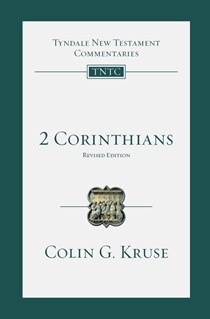 paperback
2 Corinthians
An Introduction and Commentary
Tyndale New Testament Commentaries
by Colin G. Kruse
Paul's long, complicated history with the Corinthian church culminates in this ardent defense of Christian ministry in general and of his own ministry in particular. In this revised edition, Colin Kruse updates and expands his insightful analysisthat illuminates Paul's contrast of the old and new covenants and his eloquent exposition of the ministry of reconciliation. He also charts a clear, plausible ...
-
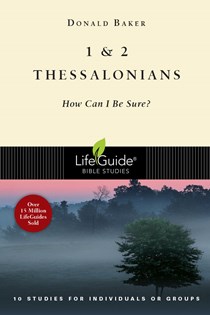 paperback
1 & 2 Thessalonians
How Can I Be Sure?
LifeGuide Bible Studies
by Donald Baker
When you suffer, do you wonder if God has forgotten you?
Do you wonder whether you will be with Jesus after you die?
Would you like to be sure that your life is pleasing to God?
At times every Christian feels anxious or insecure about life—and about faith. The Thessalonians asked many of the questions you ask today, and Paul's letters helped them find assurance. In this ten-session ...
Number of Studies: 10
-
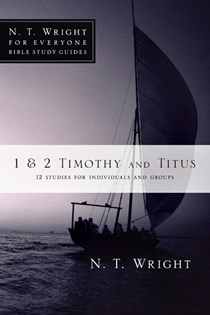 paperback
1 & 2 Timothy and Titus
N. T. Wright for Everyone Bible Study Guides
by N. T. Wright
With Phyllis J. Le PeauWhen you need to know how to do something, a manual is the best place to start. 1 and 2 Timothy and Titus might be called "the Teacher's Manual," because so much of what they contain is about the kind of teaching that Christian leaders should--andshouldn't--be giving. Just as Timothy and Titus needed help to lead their young churches well in the midst of powerful cultural forces, we need guidance ...
Number of Studies: 12
-
 paperback
2 Timothy
Standing Firm in Truth
John Stott Bible Studies
by John Stott
With Lin JohnsonStudy Scripture with John Stott
"Our era is one of theological and moral confusion, even of apostasy. And the apostle summons us, as he summoned Timothy, to be strong, brave and steadfast." In this way John Stott summarizes the message of Paul's second letter to Timothy, a letter about leadership and responsibility. The inductive studies in this newly updated guide speak to ...
Number of Studies: 8
-
 paperback
2 Corinthians
N. T. Wright for Everyone Bible Study Guides
by N. T. Wright and Patty Pell
Paul's second letter to the Corinthians explores the meaning of the cross in terms of personal suffering--his own, and that of all the Messiah's people. If in Galatians he is angry, if in Philippians he is joyful, in this letter his deep sorrow and the raw wounds of his own recent suffering are very apparent. Yet he is determined to view all of his suffering and all of the troubles of the world ...
Number of Studies: 11


