

Search Results
Showing 191 - 200 of 718 results
 Ebook
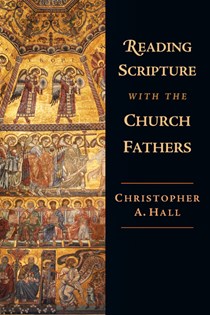
EbookReading Scripture with the Church Fathers
by Christopher A. Hall
Many Christians today long to become reacquainted with their ancient ancestors in the faith. They see a deeper worship and devotion in the prayers and hymns of the early church. And they believe that the writings of the early church can shed new light on their understanding of Scripture.
But where and how do we begin? Our first encounter with the writings of the church fathers may seem like ...
 Ebook
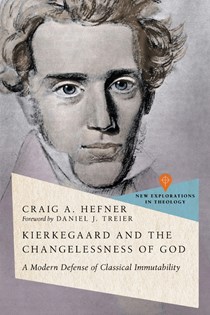
EbookKierkegaard and the Changelessness of God
A Modern Defense of Classical Immutability
New Explorations in Theology
by Craig Alan Hefner
Foreword by Daniel J. TreierDanish theologian and philosopher Søren Kierkegaard was not afraid to express his opinions. Living amid what he perceived to be a culturally lukewarm Christianity, he was often critical of his contemporary church.
But that does not mean Kierkegaard rejected traditional Christian theology. Indeed, at a time when many of his contemporaries were questioning the classical doctrine ...
 Ebook
EbookJoshua, Judges, Ruth
Old Testament Volume 4
Reformation Commentary on Scripture
by N. Scott Amos
"Where you go I will go, and where you lodge I will lodge. Your people shall be my people, and your God my God."
Ruth's response to her mother-in-law Naomi demonstrated both Ruth's loyalty to her family and her trust in God. The Reformers of the sixteenth century found theological significance in such Old Testament narratives. For example, German Lutheran pastor and theologian ...
 Ebook
EbookMatthew
New Testament Volume 1
Reformation Commentary on Scripture
Edited by Jason K. Lee and William M. Marsh
"As they were eating, Jesus took bread, and after blessing it broke it and gave it to the disciples, and said, 'Take, eat; this is my body.'"
How should one interpret these words of Jesus?
The sixteenth-century Reformers turned to Scripture to find the truth of God's Word, but that doesn't mean they always agreed on how to interpret it. For example, when approaching ...
 Paperback
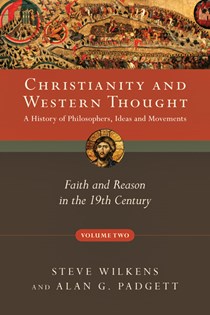
Christianity and Western Thought
Faith and Reason in the 19th Century
Christianity and Western Thought Series
by Steve Wilkens and Alan G. Padgett
Marx, Mill, Hegel, Nietzsche, Kierkegaard, Emerson, Darwin, Freud and Weber brought to the nineteenth century new realms of thought, which still continue to wield substantial influence today. As a result, the study of history, science, psychology,philosophy, sociology and religion have never been the same.These heirs to rationalism began to explore the full range of human experience--which became ...
 Paperback
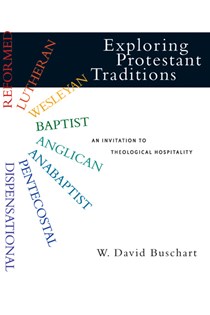
Exploring Protestant Traditions
An Invitation to Theological Hospitality
by W. David Buschart
Protestant is shorthand for a spreading family tree of church and theological traditions. Each tradition embodies a historically shaped perspective on the beliefs, practices and priorities that make up a Christian community.Whether you are an insider to one tradition, a hybrid of two or three, or--as many Christians today--an outsider to all, Exploring Protestant Traditions is ...
 Ebook
EbookThe Last Romantic
C. S. Lewis, English Literature, and Modern Theology
Hansen Series
by Jeffrey W. Barbeau
Credo Book Award Winner – Natural Theology
"There are so many books on Lewis that are simply a rehash of existing knowledge; by contrast, this is a work of fresh, detailed, illuminating scholarship. ... Barbeau's use of Lewis's personal annotations in the books in the Marion E. Wade Collection is a revelation and makes this book a permanent and important contribution to the ...
 Paperback
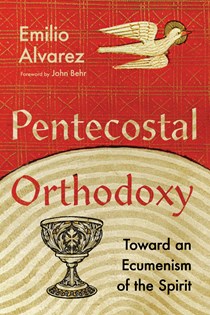
Pentecostal Orthodoxy
Toward an Ecumenism of the Spirit
by Emilio Alvarez
Foreword by John Behr“Can anything orthodox come from Pentecostalism?”
This recasting of Nathaniel's familiar question from the Gospel is a fair summary of many modern Christians' assessment of the Pentecostal tradition. Yet in recent years, a growing number of Pentecostals have been turning afresh to the ancient, creedal Christian faith.
Bishop Emilio Alvarez has himself been at the forefront ...
 Paperback
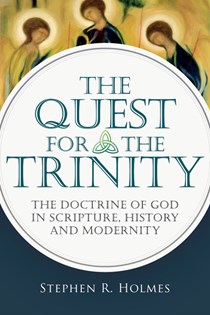
The Quest for the Trinity
The Doctrine of God in Scripture, History and Modernity
by Stephen R. Holmes
The doctrine of the Trinity was settled in the fourth century, and maintained, with only very minor disagreement or development, by all strands of the church—Western and Eastern, Protestant and Catholic—until the modern period. In the twentieth century, there arose a sense that the doctrine had been neglected and stood in need of recovery.In The Quest for the Trinity, Holmes takes us on ...
 Paperback
The Galileo Connection
by Charles E. Hummel
The church disagreed with Galileo. That set off a controversy that rages on today. The passion remains but the issues have changed and the arguments have become more complex. Do miracles conflict with scientific laws? How did the universe begin? Does the creation story in Genesis conflict with evolution?Hummel sets these controversies in historical perspective by telling the fascinating stories ...


