

Search Results
Showing 221 - 230 of 494 results
 Paperback
The Language of Science and Faith
Straight Answers to Genuine Questions
by Karl W. Giberson and Francis S. Collins
Christians affirm that everything exists because of God--from subatomic quarks to black holes. Science often claims to explain nature without including God at all. And thinking Christians often feel forced to choose between the two.
But thegood news is that we don't have to make a choice. Science does not overthrow the Bible. Faith does not require rejecting science. World-renowned scientist ...
 Paperback
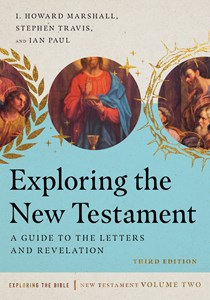
Exploring the New Testament
A Guide to the Letters and Revelation
Exploring the Bible Series
by I. Howard Marshall, Stephen Travis, and Ian Paul
Written by scholars with extensive experience teaching in colleges and universities, the Exploring the Bible series has for decades equipped students to study Scripture for themselves.
Exploring the New Testament, VolumeTwo provides an accessible introduction to the Letters and Revelation. It's filled with classroom-friendly features such as discussion questions, ...
 Paperback
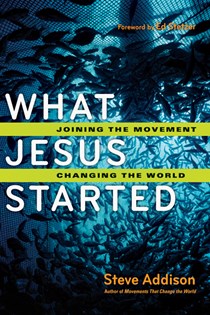
What Jesus Started
Joining the Movement, Changing the World
by Steve Addison
Foreword by Ed StetzerOutreach Magazine Resource of the Year
Sometimes we get so caught up in the power of Jesus shouting from the cross, "It is finished!" that we forget that Jesus started something. What Jesus started was a movement that began small, with intimate conversations designed to build disciples into apostles who would go out in the world and seed it with God's kingdom vision. ...
 Paperback
Christian Leadership
LifeGuide Bible Studies
by John Stott
With Carolyn NystromThe most influential leader in the early church was undoubtedly the apostle Paul. He never lost the vision of God's single new humanity—Jews and Gentiles together. And in his letters we watch him exercising his leadership skills among the early Christians..
This nine-session LifeGuide® Bible Study by John Stott is based on his book Basic Christian Leadership and covers ...
Number of Studies: 9
 Paperback
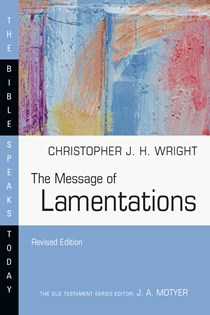
The Message of Lamentations
The Bible Speaks Today Series
by Christopher J. H. Wright
The destruction of Jerusalem by the Babylonians in 587 BC is the likely setting for the book of Lamentations. This was the most traumatic event in Old Testament history, as Israel faced extreme human suffering, the destruction ofthe ancient city, national humiliation, and the undermining of all that was thought to be divinely guaranteed, such as the Davidic monarchy, the city of ...
 Hardback
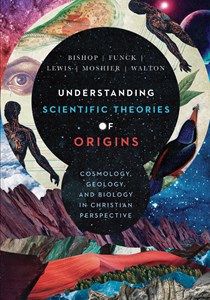
Understanding Scientific Theories of Origins
Cosmology, Geology, and Biology in Christian Perspective
BioLogos Books on Science and Christianity
by Robert C. Bishop, Larry L. Funck, Stephen O. Moshier, John H. Walton, and Raymond J. Lewis
The question of origins remains a stumbling block for many. But just as the Psalmist gained insight into God's character through the observation of nature, modern scientific study can deepen and enrich our vision of the Creator and our place in his creation. In this often contentious field Bishop, Funck, Lewis, Moshier, and Walton serve as our able guides. Based on over two decades of teaching origins ...
 Paperback
Naming the Spirit
Pneumatology Through the Arts
Foreword by Amos Yong
Contributions by Steven R. Guthrie, Shannon Sigler, David W McNutt, Jennifer Allen Craft, Joelle A Hathaway, Phil Allen, Julian Davis Reid, Wesley Vander Lugt, Jonathan A. Anderson, Christina Carnes Ananias, Erin Shaw, Taylor Worley, Devon Abts, Justin Ariel Bailey, Chelle Stearns, and Amy Christine Krall
Edited by W. David O. Taylor and Daniel Mark TrainDiscover the deep connection between theology, the arts, and the work of the Holy Spirit in Naming the Spirit
In this book, W. David O. Taylor and Daniel Train bring together a remarkable group of theologians, scholars, and artists to offer a fresh perspective on pneumatology through the creative lens of the arts.
Each chapter unpacks a particular name for the ...
 Paperback
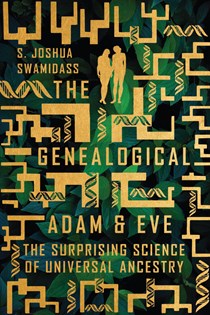
The Genealogical Adam and Eve
The Surprising Science of Universal Ancestry
by S Joshua Swamidass
Evolutionary science teaches that humans arose as a population, sharing common ancestors with other animals. Most readers of the book of Genesis in the past understood all humans descended from Adam and Eve, a couple specially created by God. These two teachings seem contradictory, but is that necessarily so? In the fractured conversation of human origins, can new insight guide us to solid ground ...
 Paperback
Gaal the Conqueror
The Archives of Anthropos
by John White
- Recipient of a 1989 Christian Home School C.S. Lewis Gold Medal award
Eleanor McFarland and John Wilson join Gaal, the Son of the High Emperor, in a battle to thwart the evil plans of Lord Lunacy. Book Two in John White's Archives of Anthropos. Winner of the 1989 C. S. Lewis Gold Medal from Christian Home School.
-
As Christians, our work and faith are integrated seamlessly in our lives. What if we all found a way to see our vocation as way of advancing God's work? In this conversation, IVP authors Barry Rowan, Gayle Beebe, Jeff Haanen, Joanna Meyer, Ross Chapman, and Ryan Tafilowski share their insights about bringing faith and work together for the glory of God.