

Search Results
Showing 221 - 230 of 380 results
-
R. Paul Stevens
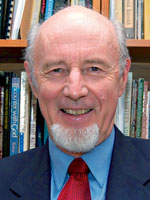
R. Paul Stevens is professor emeritus of marketplace theology and leadership at Regent College, Vancouver, British Columbia, and a marketplace ministry mentor. He has worked as a carpenter and businessman, and served as the pastor of an inner-citychurch in Montreal. He has written many books and Bible studies, including Doing God's Business, Work Matters, Marriage Spirituality, The Other Six Days and Spiritual Gifts. He is coauthor (with Pete Hammond and Todd Svanoe) of The Marketplace Annotated Bibliography.
-
Daniel D. Lee

Daniel D. Lee (PhD, Fuller Theological Seminary) is the academic dean of the Center for Asian American Theology and Ministry at Fuller Theological Seminary, where he also teaches and researches in the area of theology and Asian American studies. He is the author of Double Particularity: Karl Barth, Contextuality, and the Asian American Theology. He lives in Temple City, California with his wife, Judy, and their three daughters.
-
Mark E. Strong
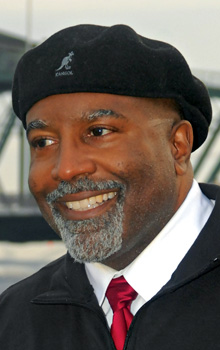
Mark E. Strong (DMin, Portland Seminary) is senior pastor of Life Change Church, a diverse congregation located in the heart of inner-city Portland, Oregon. He is also the author of Church for the Fatherless, and he serves on the Board ofRegents at George Fox Seminary. He and his wife, Marla, have four children.
-
Fleming Rutledge

Fleming Rutledge is an Episcopal priest and a bestselling author. She was in full-time parish ministry for twenty-one years, fourteen of them at Grace Church in New York City. Her other books include Advent: The Once and Future Coming of JesusChrist and The Crucifixion: Understanding the Death of Jesus Christ (winner of Christianity Today's 2017 Book of the Year Award).
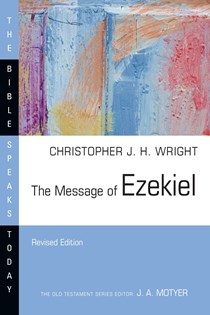 Paperback
The Message of Ezekiel
The Bible Speaks Today Series
by Christopher J. H. Wright
Ezekiel comes to us as a stranger from a distant time and land. Who is this man? He is a priest who, on his thirtieth birthday, has a dazzling vision of God on a wheeled throne; an odd prophet who engages in outlandish street theater and speaks for God on international affairs; and a seer who paints murals of apocalyptic doom and then of a restored temple bursting with emblems of ...
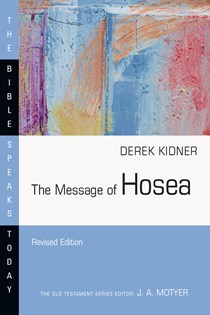 Paperback
The Message of Hosea
The Bible Speaks Today Series
by Derek Kidner
Why would God ask one of his prophets to marry a prostitute? Because he wanted to teach Hosea, the nation of Israel, and all of us today a lesson we will not forget, a lesson that is painful yet joyous.
Hosea's somber portrait of the human condition is our lesson in pain. All of us have been unfaithful, forsaking God and his ways. Yet Hosea's clear illustration of God's love ...
 Paperback
The Message of Joel, Micah & Habakkuk
The Bible Speaks Today Series
by David Prior
Where is God in times of disaster? How can God allow suffering? What are God's people to do about moral decay in society? People throughout the ages have pondered these questions, and three of the Bible's minor prophets—Joel, Micah, and Habakkuk—offer special insight on these perennial problems.
David Prior's passage-by-passage exposition of these three books provides careful ...
 Paperback
The Message of Malachi
The Bible Speaks Today Series
by Peter Adam
The book of Malachi fittingly sits in Christian Bibles as the last book of the Old Testament, which it assumes, summarizes, and applies. Yet it also looks forward to the New Testament with its promises of the coming reign of God.
A striking feature of the book is the people of God's inconsistent faithfulness. God's people neither serve God wholeheartedly nor turn entirely ...
 Paperback
The Message of Amos
The Bible Speaks Today Series
by J. A. Motyer
They neglected the needy, gained material riches through exploitation, and indulged in inauthentic religious practices. And rather than following God in the pursuit of justice, they drew on the divine name to justify their pretense. This is the social landscape in which the prophet Amos delivers a message from God. With searing clarity and daring hope, Amos calls God's people to ...
 Paperback
The Message of Samuel
Personalities, Potential, Politics and Power
The Bible Speaks Today Series
by Mary J. Evans
In the books of 1 and 2 Samuel, we witness the transition of Israel from tribal confederacy to established monarchy. And, as Mary Evans shows in this passage-by-passage commentary, during such a transition questions of identity and power are unavoidable.
In the aftermath of the decline of the judges, priests abuse their priestly privileges; Israelites covet the centralized ...


