

Search Results
Showing 241 - 250 of 370 results
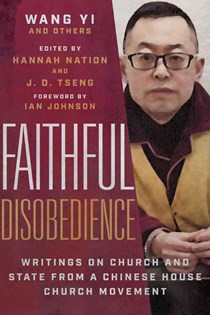 Paperback
Faithful Disobedience
Writings on Church and State from a Chinese House Church Movement
by Wang Yi
Foreword by Ian Johnson
Edited by Hannah Nation and J. D. TsengChristianity Today Book Award Finalist—Missions/Global Church
Reader's Choice Award Winner
Throughout China's rapidly growing cities, a new wave of unregistered house churches is growing. They are developing rich theological perspectives that are both uniquely Chinese and rooted in the historical doctrines of the faith. To understand ...
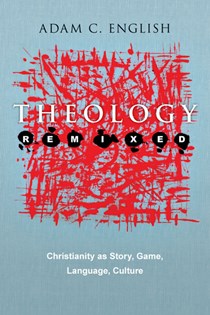 Paperback
Theology Remixed
Christianity as Story, Game, Language, Culture
by Adam C. English
Jesus didn't give his followers a fixed set of statements defining everything they needed to know about the kingdom of God in a neat package. Rather he told stories, made comparisons, drew contrasts. He talked of a mustard seed, of yeast and of ahidden treasure to communicate some of the most important truths of the faith.Jesus didn't fall back on parables because he lacked the right words. Parables ...
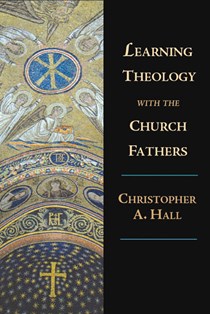 Paperback
Learning Theology with the Church Fathers
by Christopher A. Hall
The early church fathers were great theologians--though they did not think of themselves as such. They were working pastors, involved in the daily life and leadership of their congregations. Yet they were wrestling with many of the great and formative questions of the Christian faith, such as the Trinity, the incarnation, the providence of God and the nature of the church. These beliefs were defined ...
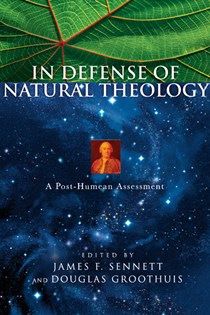 Paperback
In Defense of Natural Theology
A Post-Humean Assessment
Edited by James F. Sennett and Douglas Groothuis
The shadow of David Hume, the eighteenth-century Scottish philosopher, has loomed large against all efforts to prove the existence of God from evidence in the natural world. Indeed from Hume's day to ours, the vast majority of philosophical attacks against the rationality of theism have borne an unmistakable Humean aroma. The last forty years, however, have been marked by a resurgence in Christian ...
 Hardback
1-2 Kings, 1-2 Chronicles, Ezra, Nehemiah, Esther
Volume 5
Ancient Christian Commentary on Scripture
Edited by Marco Conti
General Editor Thomas C. OdenThe church fathers, as they did in earlier books dealing with Israel's history from the time of Joshua to the united monarchy, found ample material for typological and moral interpretation in 1-2 Kings, 1-2 Chronicles, Ezra, Nehemiah and Esther. It will be immediately clear to readers of this volume that they gave much more attention to 1-2 Kings than to others; whether this was ...
 Paperback
1-2 Kings, 1-2 Chronicles, Ezra, Nehemiah, Esther
Volume 5
Ancient Christian Commentary on Scripture
Edited by Marco Conti
General Editor Thomas C. OdenThe church fathers, as they did in earlier books dealing with Israel's history from the time of Joshua to the united monarchy, found ample material for typological and moral interpretation in 1-2 Kings, 1-2 Chronicles, Ezra, Nehemiah and Esther. It will be immediately clear to readers of this volume that they gave much more attention to 1-2 Kings than to others; whether this was ...
 Paperback
Five Festal Garments
Christian Reflections on the Song of Songs, Ruth, Lamentations, Ecclesiastes and Esther
New Studies in Biblical Theology
by Barry G. Webb
Series edited by D. A. CarsonThese five Old Testament books, traditionally known simply as "the Scrolls," are among the most neglected parts of the Christian Bible. In Judaism, the Song of Songs, Ruth, Lamentations, Ecclesiastes and Esther were eventually adopted as lectionary readings for five of the major festivals. In Christian tradition, however, no consensus has emerged about their proper use. Each book presents particular ...
 Hardback
Genesis 12-50
Volume 2
Ancient Christian Commentary on Scripture
Edited by Mark Sheridan
General Editor Thomas C. OdenGenesis 12–50 recounts the history of the patriarchs—Abraham, Isaac, Jacob, and Joseph. From their mentors Paul, Peter, Stephen, and the author of the letter to the Hebrews, the early fathers learned to draw out the spiritual significance of the patriarchal narrative for Christian believers. The Alexandrian school especially followed Paul's allegorical use of the story of Sarah ...
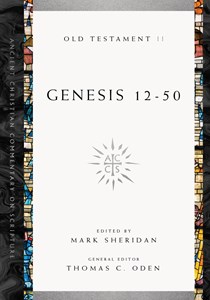 Paperback
Genesis 12-50
Volume 2
Ancient Christian Commentary on Scripture
Edited by Mark Sheridan
General Editor Thomas C. OdenGenesis 12–50 recounts the history of the patriarchs—Abraham, Isaac, Jacob, and Joseph. From their mentors Paul, Peter, Stephen, and the author of the letter to the Hebrews, the early fathers learned to draw out the spiritual significance of the patriarchal narrative for Christian believers. The Alexandrian school especially followed Paul's allegorical use of the story of Sarah ...
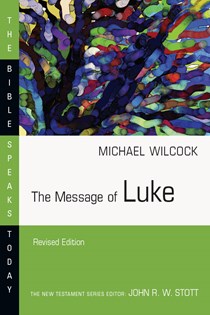 Paperback
The Message of Luke
The Bible Speaks Today Series
by Michael Wilcock
Luke the physician was fascinated by people—rich and poor, Jews and Gentiles, men and women, rulers and slaves. In his Gospel he delights to portray Jesus as the Savior not of an elite group but of anyone, in any condition, who turns to him. Jesus is indeed the Savior of the world.
Luke knew exactly what he was doing when he wrote his Gospel. He tells us his goal in the opening ...


