

Search Results
Showing 251 - 260 of 359 results
-
 paperback
The Message of Ezekiel
The Bible Speaks Today Series
by Christopher J. H. Wright
Ezekiel comes to us as a stranger from a distant time and land. Who is this man? He is a priest who, on his thirtieth birthday, has a dazzling vision of God on a wheeled throne; an odd prophet who engages in outlandish street theater and speaks for God on international affairs; and a seer who paints murals of apocalyptic doom and then of a restored temple bursting with emblems of ...
-
 paperback
The Message of Hosea
The Bible Speaks Today Series
by Derek Kidner
Why would God ask one of his prophets to marry a prostitute? Because he wanted to teach Hosea, the nation of Israel, and all of us today a lesson we will not forget, a lesson that is painful yet joyous.
Hosea's somber portrait of the human condition is our lesson in pain. All of us have been unfaithful, forsaking God and his ways. Yet Hosea's clear illustration of God's love ...
-
 paperback
The Message of Joel, Micah & Habakkuk
The Bible Speaks Today Series
by David Prior
Where is God in times of disaster? How can God allow suffering? What are God's people to do about moral decay in society? People throughout the ages have pondered these questions, and three of the Bible's minor prophets—Joel, Micah, and Habakkuk—offer special insight on these perennial problems.
David Prior's passage-by-passage exposition of these three books provides careful ...
-
 paperback
The Message of Malachi
The Bible Speaks Today Series
by Peter Adam
The book of Malachi fittingly sits in Christian Bibles as the last book of the Old Testament, which it assumes, summarizes, and applies. Yet it also looks forward to the New Testament with its promises of the coming reign of God.
A striking feature of the book is the people of God's inconsistent faithfulness. God's people neither serve God wholeheartedly nor turn entirely ...
-
 paperback
The Message of Zechariah
The Bible Speaks Today Series
by Barry G. Webb
Zechariah is imbued from beginning to end with the same heart cry that Jesus turned into a prayer for the world: "Your kingdom come."
In this volume, Barry G. Webb explores the kingdom of God as the prophet Zechariah apprehended it. In oracles and visions Zechariah challenged his hearers to return to the coming kingdom, to cleanse themselves in anticipation of the cleansing ...
-
 paperback
The Message of Amos
The Bible Speaks Today Series
by J. A. Motyer
They neglected the needy, gained material riches through exploitation, and indulged in inauthentic religious practices. And rather than following God in the pursuit of justice, they drew on the divine name to justify their pretense. This is the social landscape in which the prophet Amos delivers a message from God. With searing clarity and daring hope, Amos calls God's people to ...
-
 paperback
The Message of Samuel
Personalities, Potential, Politics and Power
The Bible Speaks Today Series
by Mary J. Evans
In the books of 1 and 2 Samuel, we witness the transition of Israel from tribal confederacy to established monarchy. And, as Mary Evans shows in this passage-by-passage commentary, during such a transition questions of identity and power are unavoidable.
In the aftermath of the decline of the judges, priests abuse their priestly privileges; Israelites covet the centralized ...
-
 paperback
The Message of Nehemiah
The Bible Speaks Today Series
by Raymond Brown
The book of Nehemiah is about starting over again. Nehemiah, one of Israel's great leaders, tells firsthand the powerful story of rebuilding ancient Jerusalem's walls after the exile. In the face of great odds, this rebuilding represented the people's renewal of faith, their overcoming of national shame, and the reformation of their conduct.
In this volume, Raymond Brown ...
-
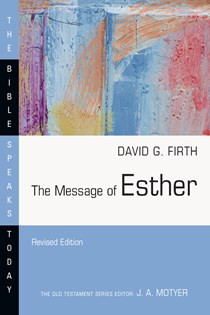 paperback
The Message of Esther
The Bible Speaks Today Series
by David G. Firth
The book of Esther tells the dramatic story of how the destruction of the Jews was averted through the bravery of Esther, the wisdom of Mordecai, and the unity of the Jewish people. Yet Esther is a rather strange book to find in the Bible. Not only is it set entirely outside of the Promised Land, it also shows no interest in that land. More than that, Esther is the only book in ...
-
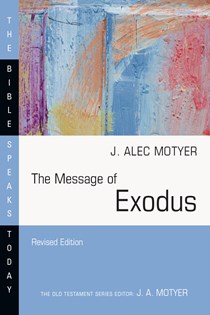 paperback
The Message of Exodus
The Days of Our Pilgrimage
The Bible Speaks Today Series
by J. A. Motyer
The whole story of the book of Exodus is a covenant narrative. In Moses' story, the pledges that God made to Abraham are honored and fulfilled as the Israelites are saved from Egypt and guided to the promised land.In this Bible Speaks Today volume, J. Alec Motyer explores what this key part of Scripture testifies about the God of the Bible. Considering the meaning that Exodus still ...


