

Search Results
Showing 31 - 40 of 313 results
 Paperback
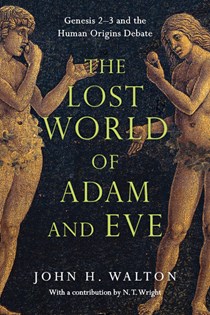
The Lost World of Adam and Eve
Genesis 2-3 and the Human Origins Debate
The Lost World Series
by John H. Walton
Contributions by N. T. WrightChristianity Today Biblical Studies Award of Merit
For centuries the story of Adam and Eve has resonated richly through the corridors of art, literature and theology. But for most moderns, taking it at face value is incongruous. And even for many thinking Christians today who want to take seriously the authority of Scripture, insisting on a "literal" understanding ...
 Hardback
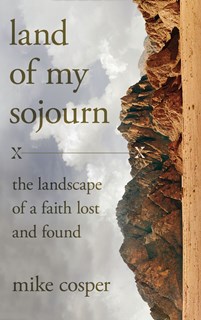
Land of My Sojourn
The Landscape of a Faith Lost and Found
by Mike Cosper
Library Journal's Best Nonfiction of 2024
"Cosper’s honest appraisal of Church disagreements and his own spiritual uncertainty results in his joyful acceptance of his identity as an imperfect wounded healer. Essential reading for Christians who have lost hope.” – Library Journal Starred Review, January 2024
Faith in the Wilderness
Land of ...
 Paperback
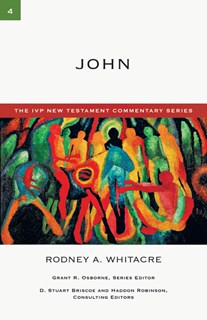
John
A Commentary on the New Testament
The IVP New Testament Commentary Series
by Rodney A. Whitacre
The Gospel of John declares its purpose clearly--"these are written that you may believe that Jesus is the Christ, the Son of God, and thay by believing you may have life in his name." Thus it fulfills a dual function, encouraging believers and providing them with evidences for proclaiming that Jesus is God's Messiah, the divine, incarnate Son of God.Christians today, as in the first century, can ...
 Hardback
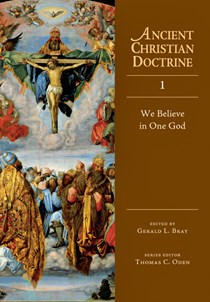
We Believe in One God
Ancient Christian Doctrine Series
Edited by Gerald Bray
"We believe in one God, the Father." The opening clause of the Nicene Creed can be summed up in a single word—monotheism. In the early centuries of the church, this striking doctrine stood starkly against a cultural background of multiple deities and spiritual powers. While it clearly builds on its Jewish heritage, calling God "Father" anticipates the Father-Son relationship ...
 Paperback
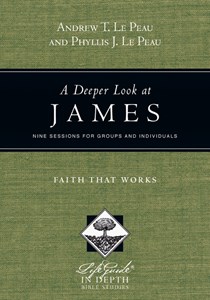
A Deeper Look at James
Faith That Works
LifeGuide in Depth Series
by Andrew T. Le Peau and Phyllis J. Le Peau
A deep look at Scripture—God's very words—is never wasted. In fact, not only is it never wasted; it's richly rewarded. The more deeply we dive into the riches of the Bible, the more deeply we can experience and serve God, the giver of all truth, wisdom, love and understanding.
LifeGuide® in Depth Bible Studies help you do just that, taking you further into themes and books of Scripture than ...
Number of Studies: 9
 Hardback
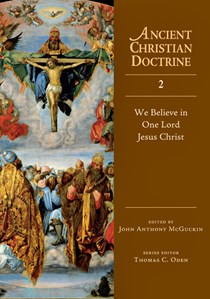
We Believe in One Lord Jesus Christ
Ancient Christian Doctrine Series
Edited by John Anthony McGuckin
"Who do you say that I am?" This question that Jesus asked of his disciples, so central to his mission, became equally central to the fledgling church. How would it respond to the Gnostics who answered by saying Jesus was less than fully human? How would it respond to the Arians who contended he was less than fully God? It was these challenges that ultimately provoked the Council ...
 Hardback
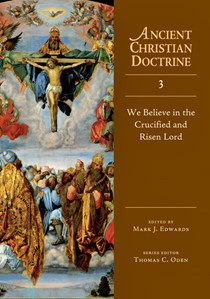
We Believe in the Crucified and Risen Lord
Ancient Christian Doctrine Series
Edited by Mark J. Edwards
The resurrection changed everything. "But for the resurrection," writes Mark J. Edwards, "there would have been no reason to argue for a union of two natures in the person of Christ, let alone for a dyad or triad in the Godhead. All that he had said and done in the course of his earthly ministry would have sat well enough with the character of a prophet who excelled such predecessors ...
 Hardback
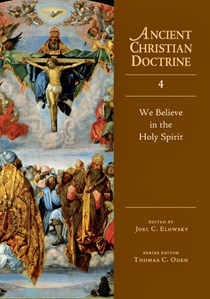
We Believe in the Holy Spirit
Ancient Christian Doctrine Series
Edited by Joel C. Elowsky
General Editor Thomas C. Oden"The Spirit blows where it pleases," Jesus said to Nicodemus. "You hear its sound but you cannot tell where it comes from or where it is going. So it is with everyone born of the Spirit."
The Spirit, like the wind, is hard to pin down. Any discussion of the Spirit is fraught with the difficulty of speaking about something or someone who defies definition and who purposely ...
-
-
Dave Brunn
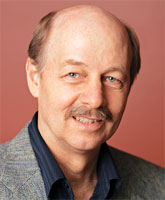
Dave Brunn is dean of academics for New Tribes Mission (NTM) USA Missionary Training Center. A missionary, translator and educator, Brunn spent over twenty years in Papua New Guinea where he served the Lamogai people through church planting, literacy training and Bible translation and consultation. Among his works is a complete translation of the New Testament into the Lamogai language.


