

Search Results
Showing 41 - 50 of 502 results
 Paperback
Reading Timothy and Titus with John Stott
13 Weeks for Individuals or Groups
Reading the Bible with John Stott Series
by John Stott
We live in a land where truth is subjective, individualized, and culturally conditioned. That same troubling thinking had invaded the churches led by Timothy and Titus, so Paul's pastoral letters to them focus on the objective and universal truthrevealed in Jesus.
John Stott's teachings from The Message of 1 Timothy and Titus and The Message of 2 Timothy are offered here ...
Number of Studies: 13
 Ebook
EbookThe Message of 2 Timothy
The Bible Speaks Today Series
by John Stott
After teaching many times from the book of 2 Timothy, John Stott writes, "I have been impressed afresh by the timeliness for today of what the apostle writes, especially for young Christian leaders. For our era too is one of theological and moral confusion, even of apostasy. And the apostle summons us, as he summoned Timothy, to be strong, brave and steadfast."
In this revised ...
 Ebook
EbookThe Message of 2 Corinthians
The Bible Speaks Today Series
by Paul W. Barnett
The letter of 2 Corinthians reveals a powerful debate between the apostle Paul and a shadowy group of opponents, along with the local church members who supported them. Paul records a range of emotional extremes as he defends hisdoctrine, ministry, and character to this beloved yet troublesome congregation. In his response to the conflict, Paul develops a momentous theological message: ...
 Paperback
The Message of John's Letters
The Bible Speaks Today Series
by David Jackman
Immorality inundating the Christian community and gradually eroding the foundations of Christian living. The truth of God incarnate, the atonement, and the bodily resurrection of Christ under attack—even from within the church. These were the problems that faced the Christians of John's day. In a society that scorned the gospel and sneered at godly living, John encouraged Christians ...
 Ebook
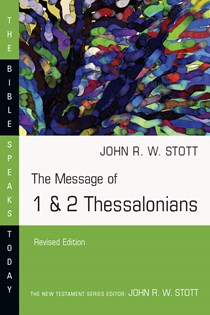
EbookThe Message of 1 & 2 Thessalonians
The Bible Speaks Today Series
by John Stott
The gospel shapes the church and the church spreads the gospel. In his heartfelt letters to the Thessalonians, the apostle Paul calls believers again and again to these essential truths. To encourage and correct the young church in Thessalonica, Paul addresses many issues that are still of vital importance today, such as Christian community, church leadership, moral living, evangelism, ...
 Hardback
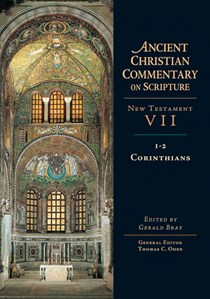
1-2 Corinthians
Volume 7
Ancient Christian Commentary on Scripture
Edited by Gerald Bray
General Editor Thomas C. OdenIn Paul's letters to the Corinthian church, the pastoral issues of a first-century Christian community stand out in bold relief. And as the apostle responds to these challenges, the fathers lean over his shoulder, marveling and commenting on his pastoral wisdom.Best known among these patristic commentators is Chrysostom, whose seventy-seven homilies on the two Corinthian epistles ...
 Hardback
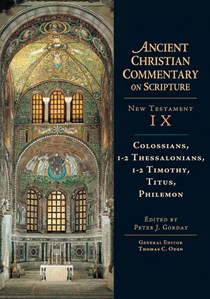
Colossians, 1-2 Thessalonians, 1-2 Timothy, Titus, Philemon
Volume 9
Ancient Christian Commentary on Scripture
Edited by Peter J. Gorday
General Editor Thomas C. OdenChristianity Today Book of the Year
For the early church fathers, certain passages in the shorter letters of St. Paul proved particularly important in doctrinal disputes and practical church matters. Pivotal in controversies with the Arians and the Gnostics, the most commented-on christological text in these letters was Colossians 1:15-20, where Jesus ...
-
Churches are struggling to meet the needs of their congregations and to entice people to return to church after pandemic living. But instead of rolling out fancy programs, ministry veteran Carolyn Carney says we can revitalize our churches through the simple yet powerful act of group prayer. Read this article for two practical tips on building prayer in your congregation.
 Paperback
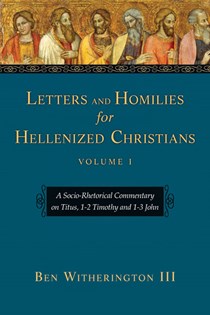
Letters and Homilies for Hellenized Christians
A Socio-Rhetorical Commentary on Titus, 1-2 Timothy and 1-3 John
Letters and Homilies Series
by Ben Witherington III
The study of the so-called General or Catholic Epistles has been hampered, argues Ben Witherington, by the failure to properly discern their genre. Several of these "letters" are much better understood as homilies--although, like the rest of the New Testament, they are situation specific. In this first of three volumes, Witherington extends his innovative socio-rhetorical analysis of New Testament ...
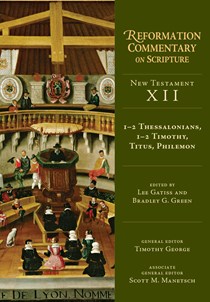 Hardback
1-2 Thessalonians, 1-2 Timothy, Titus, Philemon
New Testament Volume 12
Reformation Commentary on Scripture
Edited by Lee Gatiss and Bradley G. Green
"Since we believe that Jesus died and rose again, even so, through Jesus, God will bring with him those who have fallen asleep." (1 Thess 4:14).
The epistles of the New Testament provide unparalleled insight into the realities of the life of the early church, guidance for those called to lead the church, and comfort in the face of pressing theological questions. Among those ...