

Search Results
Showing 51 - 60 of 73 results
-
 paperback
The Message of Obadiah, Nahum & Zephaniah
The Bible Speaks Today Series
by Gordon Bridger
Among the books of the Bible, Obadiah, Nahum, and Zephaniah are rarely read or preached. Gordon Bridger moves against this trend, encouraging the study and application of these Old Testament prophets.
Important biblical themes are found at the heart of these books: God's personal, sovereign, righteous, and loving character; facing up to sin and judgment; responding in repentance ...
-
 paperback
The Message of Jonah
The Bible Speaks Today Series
by Rosemary Nixon
The book of Jonah is likely the best known of the minor prophets. It is often remembered for its oddity: a runaway prophet swallowed by a whale! But there must be more to the book than that.
In Jonah we find charted the course not just of a discontented prophet but of Israel's attitude toward its most despised neighbor in the Mediterranean world. Jonah refuses God's call because ...
-
 paperback
The Message of the Sermon on the Mount
The Bible Speaks Today Series
by John Stott
"The followers of Jesus are to be different," writes John Stott, "different from both the nominal church and the secular world, different from both the religious and the irreligious. The Sermon on the Mount is the most complete delineation anywhere in the New Testament of the Christian counter-culture." In the Sermon on the Mount, the "nearest thing to a manifesto" that Jesus ever ...
-
 paperback
The Message of Acts
The Bible Speaks Today Series
by John Stott
The Spirit moves the church into the world. That is how it has always been since the day of Pentecost, when the Spirit brought thousands from many countries into the body of Christ.
With the breadth and scholarly care that marked John Stott's years of ministry, this revised Bible Speaks Today volume opens to us the early days of the church as recorded by Luke in the book of ...
-
 paperback
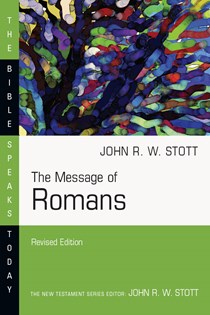
The Message of Romans
The Bible Speaks Today Series
by John Stott
When Paul first penned his letter to the house churches of Rome, his purpose was to gain prayerful support for his coming mission to the western Mediterranean. Little did he know that for two millennia this finely tuned expositionof the gospel would echo through church and academy, market and home, around the world.
In this revised Bible Speaks Today volume, John Stott clearly ...
-
 paperback
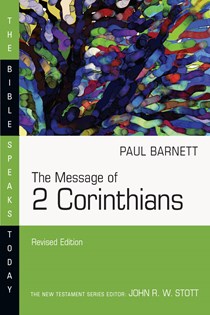
The Message of 2 Corinthians
The Bible Speaks Today Series
by Paul W. Barnett
The letter of 2 Corinthians reveals a powerful debate between the apostle Paul and a shadowy group of opponents, along with the local church members who supported them. Paul records a range of emotional extremes as he defends hisdoctrine, ministry, and character to this beloved yet troublesome congregation. In his response to the conflict, Paul develops a momentous theological message: ...
-
 paperback
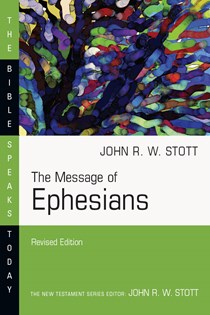
The Message of Ephesians
The Bible Speaks Today Series
by John Stott
A common blind spot for evangelical Christians is to overlook the central importance of the church, emphasizing individual salvation more than the saved community. Yet no one can come away from a careful reading of Ephesians witha privatized gospel. Paul's letter to the Ephesians clearly sets forth God's eternal purpose to create the church—God's new society.
In this revised ...
-
 paperback
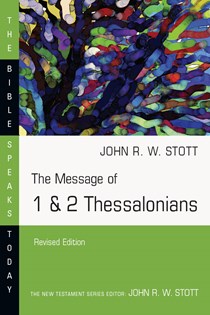
The Message of 1 & 2 Thessalonians
The Bible Speaks Today Series
by John Stott
The gospel shapes the church and the church spreads the gospel. In his heartfelt letters to the Thessalonians, the apostle Paul calls believers again and again to these essential truths. To encourage and correct the young church in Thessalonica, Paul addresses many issues that are still of vital importance today, such as Christian community, church leadership, moral living, evangelism, ...
-
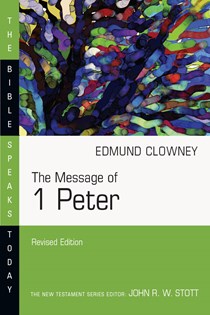 paperback
The Message of 1 Peter
The Bible Speaks Today Series
by Edmund P. Clowney
The letter of 1 Peter is a traveler's guide for Christian pilgrims. To believers scattered throughout Asia Minor, Peter wrote with a reminder that they were temporary residents, strangers looking toward their true homeland. As stormy persecutions were beginning in the region, Peter brought a message of hope, encouraging readers to see their lives in the context of God's great work ...
-
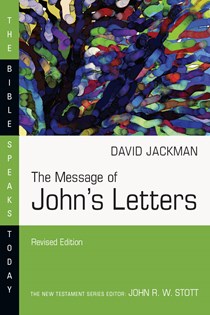 paperback
The Message of John's Letters
The Bible Speaks Today Series
by David Jackman
Immorality inundating the Christian community and gradually eroding the foundations of Christian living. The truth of God incarnate, the atonement, and the bodily resurrection of Christ under attack—even from within the church. These were the problems that faced the Christians of John's day. In a society that scorned the gospel and sneered at godly living, John encouraged Christians ...


