
Search Results
Showing 61 - 70 of 595 results
-
 paperback
The Church
Contours of Christian Theology
by Edmund P. Clowney
At a time in which the very word church sounds a tone of dull irrelevance, the doctrine of the church has suffered the studied neglect of many Christian leaders. The persistent demands to market, manage and grow the church and to meet thefelt needs of churched and unchurched all threaten to quench theological reflection on the abiding nature and mission of the church. But few activities ...
-
 paperback
The Message of 1 Peter
The Bible Speaks Today Series
by Edmund P. Clowney
The letter of 1 Peter is a traveler's guide for Christian pilgrims. To believers scattered throughout Asia Minor, Peter wrote with a reminder that they were temporary residents, strangers looking toward their true homeland. As stormy persecutions were beginning in the region, Peter brought a message of hope, encouraging readers to see their lives in the context of God's great work ...
-
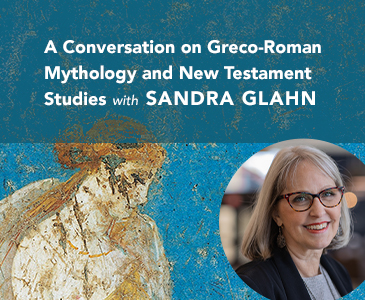
In her book "Nobody's Mother," New Testament scholar Sandra Glahn digs deep into evidence about the ancient Greek goddess Artemis of the Ephesians from both biblical and classical sources in order to bring into focus Paul's teaching in 1 Timothy. Read this interview to learn more about her thoughts on scholarship, mentoring, and the role of story in academic writing.
-
 paperback
Letters and Homilies for Hellenized Christians
A Socio-Rhetorical Commentary on 1-2 Peter
Letters and Homilies Series
by Ben Witherington III
Letters and Homilies for Hellenized Christians, Volume 2 is the one of two volumes extending Ben Witherington's innovative socio-rhetorical analysis of New Testament books to the latter-Pauline and non-Pauline corpora. By dividing the volumes according to the socioreligious contexts for which they were written, Witherington sheds fresh light on the documents, their provenance, character ...
-
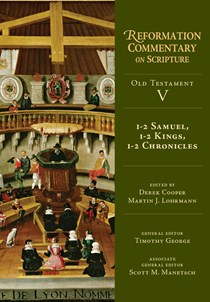 hardcover
1-2 Samuel, 1-2 Kings, 1-2 Chronicles
Old Testament Volume 5
Reformation Commentary on Scripture
Edited by Derek Cooper and Martin J. Lohrmann
"Then David said to the Philistine, 'You come to me with a sword and with a spear and with a javelin, but I come to you in the name of the LORD of hosts.'" (1 Samuel 17:45) Reflecting upon David's victory over Goliath, Reformation translator, theologian and commentator William Tyndale compared it to Christ's victory over sin and death: "When David had killed Goliath the giant, glad tidings came ...
-
 paperback
Joshua, Judges, Ruth, 1-2 Samuel
Volume 4
Ancient Christian Commentary on Scripture
Edited by John R Franke
General Editor Thomas C. OdenThe history of the entry into the Promised Land followed by the period of the Judges and early monarchy may not appear to readers today as a source for expounding the Christian faith. But the church fathers readily found parallels, or types, in the narrative that illumined the New Testament. An obvious link was the similarity in name between Joshua, Moses' successor, and Jesus—indeed, ...
-
 paperback
1 Corinthians
A Commentary on the New Testament
The IVP New Testament Commentary Series
by Alan F. Johnson
Upwardly mobile Christians facing radically diverse ethnic, religious, economic and social conditions. The church divided over issues of leadership and authority, sexual morality, gender and worship, marriage and divorce. Sound familiar?First-century Corinth and its challenges were not so different from our own. Yet in the midst of this detailed, practical letter to a church in crisis is found one ...
-
 paperback
1-2 Timothy & Titus
A Commentary on the New Testament
The IVP New Testament Commentary Series
by Philip H. Towner
Questions about the nature of Christian leadership and authority, attitudes toward wealth and materialism, proper responses to cults, the role of women in the church, and even the validity of the institution of marriage are not new. Paul addressedthese issues in personal letters to Timothy and Titus as leaders of first-century congregations in Ephesus and Crete. What he had to say to them is as ...
-
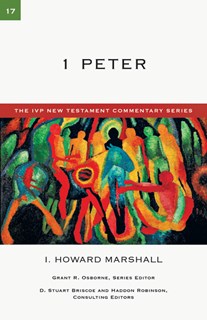 paperback
1 Peter
A Commentary on the New Testament
The IVP New Testament Commentary Series
by I. Howard Marshall
- Recipient of a Christianity Today 1992 Critics' Choice Award
As a young church in a hostile environment, Peter's first readers found in his letter encouragement, not just for facing suffering, but for living responsibly in the world as faithful disciples of Jesus Christ. Christians today will also find in Peter's letter a wealth of practical counsel on how to conduct themselves ...
-
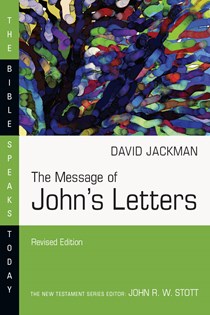 paperback
The Message of John's Letters
The Bible Speaks Today Series
by David Jackman
Immorality inundating the Christian community and gradually eroding the foundations of Christian living. The truth of God incarnate, the atonement, and the bodily resurrection of Christ under attack—even from within the church. These were the problems that faced the Christians of John's day. In a society that scorned the gospel and sneered at godly living, John encouraged Christians ...