

Search Results
Showing 1 - 10 of 348 results
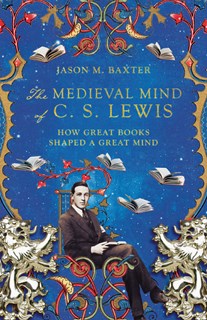 Paperback
The Medieval Mind of C. S. Lewis
How Great Books Shaped a Great Mind
by Jason M Baxter
C. S. Lewis had one of the great minds of the twentieth century.
Many readers know Lewis as an author of fiction and fantasy literature, including the Chronicles of Narnia and the Space Trilogy. Others know him for his booksin apologetics, including Mere Christianity and The Problem of Pain. But few know him for his scholarly work as a professor of medieval ...
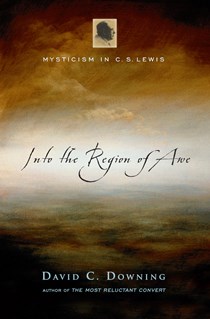 Hardback
Into the Region of Awe
Mysticism in C. S. Lewis
by David C. Downing
C. S. Lewis is generally thought of as a commonsense Christian, one who offers theology that is understandable and morality that is practical. And yet, when writing about Narnia to a class of fifth graders who asked if it were possible to visit Aslan's country, Lewis replied that the only way he knew of was through death but then added this curious qualifier: "Perhaps some very good people get just ...
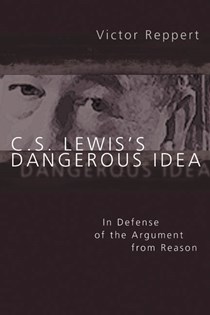 Paperback
C. S. Lewis's Dangerous Idea
In Defense of the Argument from Reason
by Victor Reppert
Who ought to hold claim to the more dangerous idea--Charles Darwin or C. S. Lewis? Daniel Dennett argued for Darwin in Darwin's Dangerous Idea (Touchstone Books, 1996). In this book Victor Reppert champions C. S. Lewis.Darwinists attemptto use science to show that our world and its inhabitants can be fully explained as the product of a mindless, purposeless system of physics and chemistry. ...
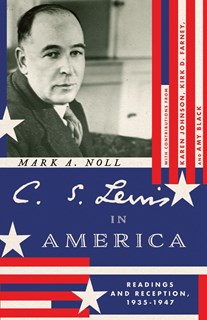 Paperback
C. S. Lewis in America
Readings and Reception, 1935–1947
Hansen Series
by Mark A. Noll
Contributions by Kirk D Farney"An invaluable assessment of Lewis's reception in the United States, offering important insights into both Lewis's significance and the distinctives of the American religious mind." – Alister McGrath, Oxford University
Perhaps no other literary figure has transformed the American religious landscape in recent history as much as C. S. Lewis. Even before the ...
 Paperback
C. S. Lewis's Case for Christ
Insights from Reason, Imagination and Faith
by Art Lindsley
There can be many obstacles to faith. As Art Lindsley says, "Lewis knew what it was like not to believe. He struggled with many doubts along the way to faith. Since he was an ardent atheist until age thirty-one, Lewis's experience and education prepared him to understand firsthand the most common arguments against Christianity." As a scholar and teacher of literature at Oxford, Lewis confronted ...
 Paperback
Pursuing an Earthy Spirituality
C. S. Lewis and Incarnational Faith
by Gary S. Selby
"Red beef and strong beer" was how C. S. Lewis described his education under one of his early tutors. It was, in other words, a substantial education that engaged deeply with the intellectual tradition and challenged him to grow.Gary Selby sees Lewis's expression as an indication of the kind of transformation that is both possible and necessary for the Christian faith, and he contends ...
 Paperback
Splendour in the Dark
C. S. Lewis's Dymer in His Life and Work
Hansen Series
by Jerry Root
Notes by David C. Downing"... Root has done us all an immense service, by rescuing this neglected poem from obscurity and presenting us with an excellent, scholarly edition. ... Everyone who loves Lewis will not only enjoy this book but also find that Root's commentary on Dymer enhances their reading of Lewis's other works as well." – Malcolm Guite, Girton College, Cambridge
Several years ...
 Paperback
C. S. Lewis Francis Schaeffer
Lessons for a New Century from the Most Influential Apologists of Our Time
by Scott R. Burson and Jerry L. Walls
In some ways, they could not be more different: the pipe-smoking, Anglican Oxford don and the blue-collar scion of conservative Presbyterianism. But C. S. Lewis and Francis Schaeffer, each in his unique way, fashioned Christian apologetics that influenced millions in their lifetimes. And the work of each continues to be read and studied today.In this book Scott Burson and Jerry Walls compare and ...
 Paperback
The Last Romantic
C. S. Lewis, English Literature, and Modern Theology
Hansen Series
by Jeffrey W. Barbeau
Credo Book Award Winner – Natural Theology
"There are so many books on Lewis that are simply a rehash of existing knowledge; by contrast, this is a work of fresh, detailed, illuminating scholarship. ... Barbeau's use of Lewis's personal annotations in the books in the Marion E. Wade Collection is a revelation and makes this book a permanent and important contribution to the ...
 Paperback
The Everyday Mysticism of C. S. Lewis
Spirituality for Daily Life
by Gary S. Selby
Everyday Encounters with God Through the Lens of C. S. Lewis
For many Christians, the mystics—saints and teachers throughout Christian history who have experienced direct encounters with God—are in a category of their own.We read about the supernatural experiences of biblical figures like Moses, Isaiah, and John, and historical figures like Julian of Norwich, Teresa of Ávila, ...


