

Search Results
Showing 111 - 120 of 883 results
 Paperback
Graven Ideologies
Nietzsche, Derrida Marion on Modern Idolatry
by Bruce Ellis Benson
What do the philosophers Friedrich Nietzsche, Jacques Derrida and Jean-Luc Marion have in common with Christianity? Surprisingly, they are all concerned about idolatry, about the tendency we have to create God in our own image and about what we can do about it. Can we faithfully speak of God at all without interposing ourselves? If so, how?Bruce Ellis Benson explores this common concern by clearly ...
-
Want more context as you begin to study 1 Kings? This introduction will give you the background you need as you read the Daily Quiet Time Bible Study. We hope you continue to discover the riches of Scripture and draw closer to God as you join the millions who have used this free devotional resource. -
Want more context as you begin to study 1 Peter? This introduction will give you the background you need as you read the Daily Quiet Time Bible Study. We hope you continue to discover the riches of Scripture and draw closer to God as you join the millions who have used this free devotional resource.
 Paperback
Identity and Idolatry
The Image of God and Its Inversion
New Studies in Biblical Theology
by Richard Lints
Series edited by D. A. CarsonOne of Desiring God's Top 15 Books
"So God created man in his own image, in the image of God he created him; male and female he created them." (Genesis 1:27)
Genesis 1:26-27 has served as the locus of most theological anthropologies in the central Christian tradition. However, Richard Lints observes that too rarely have these verses been understood as conceptually interwoven ...
 Paperback
Broken and Whole
A Leader's Path to Spiritual Transformation
by Stephen A. Macchia
In his nearly four decades of pastoral, parachurch and nonprofit ministry leadership Steve Macchia has come to understand his own brokenness. He writes:"I've experienced great success and a few embarrassing failures. . . . In essence, as much as I like to view myself as a good or even a very good leader, I'm more truthfully a blessed and broken leader, one who is daily in need of being . . . redeemed ...
 Paperback
Paul's Theology of Preaching
The Apostle's Challenge to the Art of Persuasion in Ancient Corinth
by Duane Litfin
"We preach Christ crucified: a stumbling block to Jews and foolishness to Gentiles, but to those whom God has called, both Jews and Greeks, Christ the power of God and the wisdom of God." When Paul preached about the crucified and risen Jesus Christ to the church at Corinth and elsewhere, did he follow the well-established rhetorical strategy of his day or did he pursue a different path? And what ...
 Paperback
Christian Leadership
LifeGuide Bible Studies
by John Stott
With Carolyn NystromThe most influential leader in the early church was undoubtedly the apostle Paul. He never lost the vision of God's single new humanity—Jews and Gentiles together. And in his letters we watch him exercising his leadership skills among the early Christians..
This nine-session LifeGuide® Bible Study by John Stott is based on his book Basic Christian Leadership and covers the first four ...
Number of Studies: 9
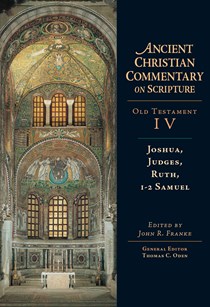 Hardback
Joshua, Judges, Ruth, 1-2 Samuel
Volume 4
Ancient Christian Commentary on Scripture
Edited by John R Franke
General Editor Thomas C. OdenThe history of the entry into the Promised Land followed by the period of the Judges and early monarchy may not appear to readers today as a source for expounding the Christian faith. But the church fathers readily found parallels, or types, in the narrative that illumined the New Testament. An obvious link was the similarity in name between Joshua, Moses' successor, and Jesus—indeed, ...
 Paperback
The Way of Dante
Going Through Hell, Purgatory, and Heaven with C. S. Lewis, Dorothy L. Sayers, and Charles Williams
Hansen Series
by Richard Hughes Gibson
Afterword by Nicole MazzarellaRediscovering Dante with Lewis, Sayers, and Williams
For centuries, readers have marveled at the imaginative brilliance of authors like C. S. Lewis, Dorothy L. Sayers, and Charles Williams. But what inspired these literary giants? The Way of Dante takes you on a journey of discovering how the medieval poet Dante Alighieri and his masterwork, The Divine Comedy, ...
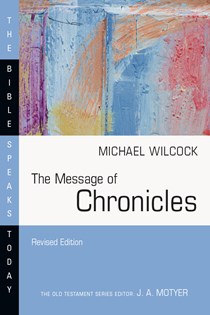 Paperback
The Message of Chronicles
The Bible Speaks Today Series
by Michael Wilcock
Michael Wilcock sees Chronicles first and foremost as a sermon. Its object: to foster a right relationship between God and his people. The Chronicler finds in the records of Israel the great overall pattern of God's hand in history. The Lord's constant mercy, love, and faithfulness shine through. With great perception, the Chronicler first selects and then proclaims this vibrant ...