

Nine Ways of Being
A Conversation with Suzanne Stabile and Joey Stabile Schewee on the Enneagram
For decades, Suzanne Stabile has helped thousands of people use the Enneagram as a pathway to deeper self-awareness and compassion for others. Her daughter, Joey Stabile Schewee, has taken a similar path as an Enneagram teacher and consultant for business cultures and leaders.
In this conversation, Suzanne and Joey reflect on how the Enneagram has informed their relationship, why the ancient tool is still relevant, how it can form us spiritually, and why the Enneagram is most transformative when it leads us beyond personality labels and toward greater love of God and each other.
About the Authors
Suzanne Stabile
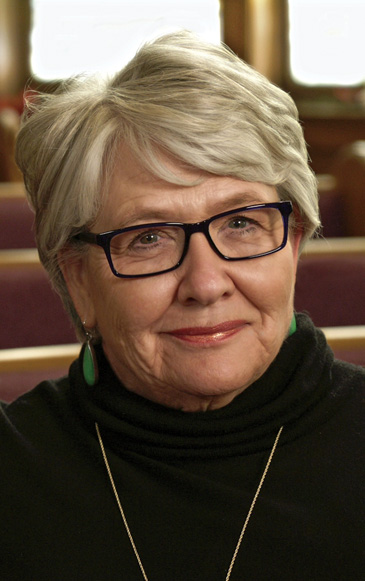
Suzanne Stabile is a highly sought-after speaker, teacher, and internationally recognized Enneagram master teacher, having conducted over five hundred workshops. She is the author of The Path Between Us and she is creator and host of The Enneagram Journey podcast. Along with her husband, Rev. Joseph Stabile, she is cofounder of Life in the Trinity Ministry. Their ministry home, the Micah Center, is located in Dallas, Texas.
Joey Stabile Schewee
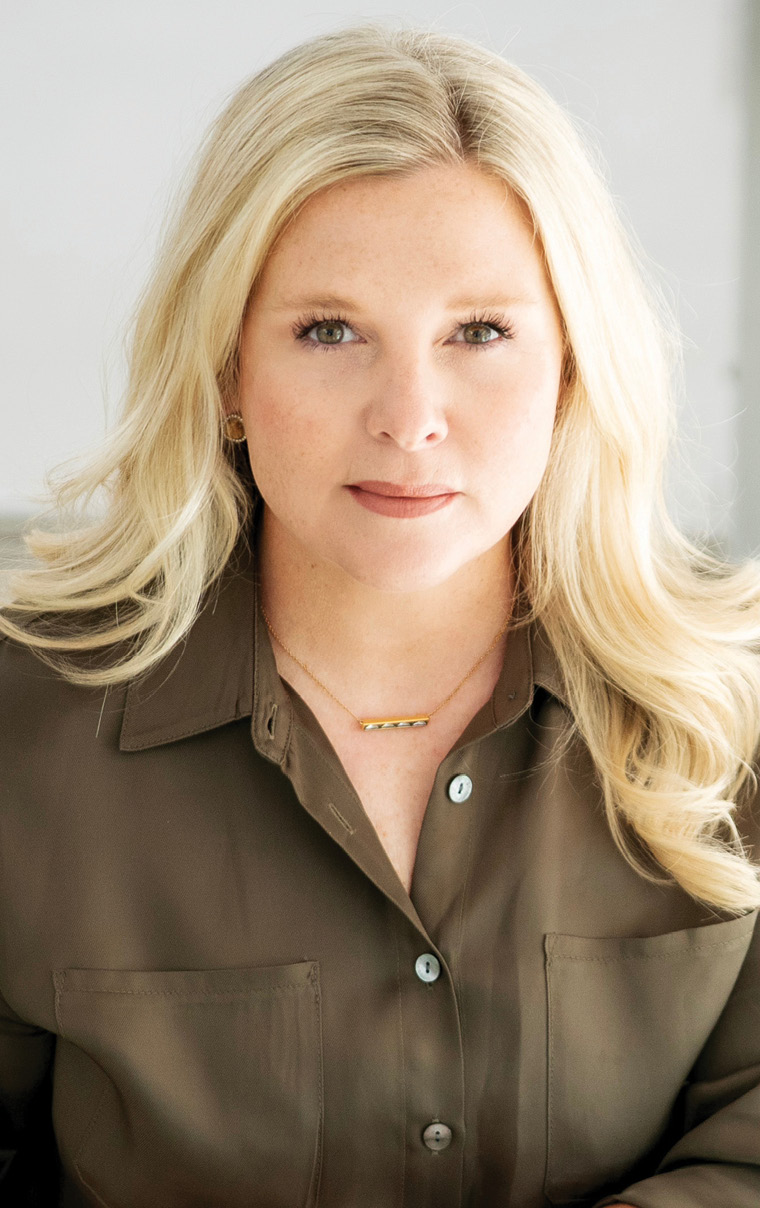
Joey Stabile Schewee is a sought-after theorist with bone-level understanding of the unique motivations that inform human behavior. She has advanced the historic wisdom of the Enneagram for modern consumption and practical application and works as a management consultant for business cultures and an executive coach for leaders. Joey and her husband, Billy, live in Texas with their two sons and enjoy contributing to meaningful conversation surrounding marriage and parenting through the Enneagram lens.
Which Enneagram number are each of you, and how has that played out in your mother-daughter relationship?
Suzanne Stabile: Joey is an Eight and I am a Two. Our relationship has included the Enneagram since Joey was eighteen, so we have had the blessing of being able to name and respect our differences more than we struggle with them for a long time. We share a line on the Enneagram, which, in our case, means that my move to Eight when I am in Stress is the place where I find what I need to take care of myself. And Joey’s move to Two when she finds herself in Security offers her a gentler response to herself first and then to others.
We are alike in many ways, which I suppose would be true for many mothers and daughters. However, much of the time, relationships are weighed down by the baggage they have created and they carry. Joey and I don’t have that. We work at our relationship consistently. In essence, we just don’t allow room for disconnections and misunderstandings. When something isn’t right, one of us names it, and then we make it right. The Enneagram makes that possible.
I cannot end my response without adding that I really like Joey, and I respect her. If she wasn’t my daughter, I would want to know her and learn from her.
Joey Stabile Schewee: Sharing a line with my mother has been extremely impactful for our relationship. I believe that the lines connected to each type ultimately steer the ways in which we think and feel and do. My language is that types who share lines have a mutual understanding that can be profound. Sharing independent doing (Eight) and responsive feeling (Two) with my mom means a lifetime of intuitively knowing where she is coming from in most situations, even though she processes with the center of intelligence that I am hardwired to employ least or last.
At what point in your lives did you realize you wanted to teach and share the wisdom of the Enneagram with others?
Suzanne: I was forty when Father Richard Rohr began to teach me the Enneagram. I thought it was the most interesting thing I had ever encountered. He agreed to keep teaching me as I learned more and had more knowledge and of course more questions. He encouraged me to study it for five years without talking about it. So I did. And by the time I had read everything I could get my hands on, which honestly wasn’t much in 1987, and lived the questions while Fr. Rohr shared his wisdom with me, we both knew I was ready to teach.
Joey: The consistent validity of the Enneagram has fascinated me for thirty years. It has been a lens through which I have lived my entire adult life. After applying that lens in the professional environments that I occupied for a decade after college, I realized the far-reaching benefits of utilizing the Enneagram in secular spaces and knew that was something I could successfully offer to others based on my unique understanding and exposure.
What does the Enneagram have to do with spiritual formation?
Suzanne: One of the things I have known for years is that you can’t change what you can’t name. And it is often the things we can’t name that keep us from understanding our relationship with God. Great philosophers from all of history have encouraged the same thing as we begin a serious spiritual journey. “Know thyself.” For most people that is very challenging. Many of us have responded with, “Okay! But how shall I do that?” The Enneagram is one way, and if one chooses to take the Enneagram wisdom seriously, using it for self-knowledge, and with the spiritual practice of examen for self-awareness, it becomes much more.
The most important gift of the Enneagram is that it allows us to understand the difference in essence and personality and then teaches us how to allow parts of our personality to fall away so we can access our *essence more easily and more freely.
*Essence being, who you were created by God to be, before you did anything wrong or anything right.
Joey: I will leave the bulk of this answer to the Enneagram Godmother, as it is in her wheelhouse. I will offer that, for my own spiritual journey, the two are, in no way, mutually exclusive. I have yet to discover a more tangible way to access God’s grace for self and others.
Despite the age of the Enneagram, how/why is it relevant to our current cultural context?
Suzanne: The ancient wisdom of the Enneagram is never irrelevant nor obsolete because as people we are, and will forever be, the same in that we will always see in one of nine ways. We will always process with the three centers of intelligence in a certain order, and we will always find our personalities in need of taming if we are to live our lives more productively and more peacefully.
In addition, the Enneagram is known in every faith belief around the globe, and its popularity is increasing everywhere. People laugh at me when I say it could be the answer to world peace.
To that I would say, I don’t think we will have true peace in any part of our lives if we don’t know ourselves and if we aren’t working to be better humans. The Enneagram really helps!
Joey: My mother ushered this work toward global exposure by making it more relatable through storytelling. Throughout seventeen years of consulting and using the Enneagram as a tool in professional environments, I have witnessed the immediate positive impact for thousands of individuals and their teams. My husband developed his doctoral treatise on the benefits of utilizing Enneagram understanding in education. He and I continue to foster relational grace through our joint teaching on Enneagram in marriage and parenting and within our annual Enneagram for the Modern World cohorts. Perhaps, for the first time in history, people are realizing the relevance of the Enneagram as a patient and wise companion in all aspects of life, not solely a spiritual journey.
If someone asked you why they should care about the Enneagram, what would be your two-sentence answer?
Suzanne: You should care about the Enneagram because it is practical and accessible hope for ending the divisiveness that now defines the lives of most of the people on the planet. We are all alike in many ways and our differences can be respected and managed with the wisdom of the Enneagram.
Joey: Understanding the unique intersection of thinking, feeling, and doing and how it specifically contributes to our hardwiring, by type, is the clearest path to truly knowing ourselves and others. If more of us embraced the intentional self-knowledge and mutual acceptance that Enneagram wisdom so beautifully cultivates, it would, literally, change the world for the better.


